Showing posts with label hair. Show all posts

Tuesday, January 20, 2015

Interpreting Male Compliments

When people change something about their appearance – their hairstyle, clothes, makeup, hair color, etc. – they often rely on the feedback that they get from others in deciding whether or not they themselves like the change. I hear people say all the time (after updating their look) “Yeah, I wasn’t so sure about it, but people seem to like it." Of course, this often goes unspoken, but in general people take others’ compliments at face value. This is the problem I want to address.

Let me start with a couple examples. A female coworker recently showed up at the office with short hair. Whereas previously it had been mid-back length, she’d cut it to be only a few inches long. It looked OK at best; but she looked significantly worse than she had with long hair. When she walked into our area of the office for the first time, the “feedback” started…
Guy 1: “Oh, wow you cut your hair – it looks great!”  
Guy 2: “Yeah, wow, looks good.” 
Guy 3: “You look much younger.”
(I didn’t contribute, because I’d run into her earlier in the day and after expressing my surprise at barely recognizing her, told her it looked “stylish” in an unenthusiastic tone.)

When she walked out of our area and out of earshot, we all looked at each other. Guy 1, who had previously always talked about how sexy this girl was, burst out immediately: “Maaann, it looks horrible! What did she do???” We all agreed.

Another time, a girl walked into the same area of our office wearing a new shirt, which was bright green. It drew attention, but it looked horrible. It didn't work with her complexion at all. Immediately, one guy – who is particularly attractive to most of the girls in the office – said “Nice shirt. Good color; green looks good on you.” I am sure she walked away thinking to herself “Wow, I guess green is my color.”

In the first example, obviously the intention behind the compliment was to make the cute girl feel good, or at least to avoid making her feel bad. This is fairly easy to recognize and understand. But something different is at work in the second example, and I've been recognizing it happening more and more in my daily life as I've come to realize what is going on: people respond positively to the things they notice, not to things that are positive. A person might see a friend and think “wow look at that new belt” because it really stands out, or “wow her hairstyle (or color) is completely different today.” But then, because it is so noticeable, they feel the need to acknowledge it. Once they've acknowledged it, the same phenomenon at work in the first example kicks in: they feel the need to make the person feel good about it, and an inaccurate compliment is the result. So in the end, “nice haircut” actually just means “I noticed your haircut.” And if you subscribe to the school of style that says "you should wear your clothes; your clothes shouldn't wear you," then you realize that this is more often a bad sign than a good one.

I've occasionally been given compliments like "you look good in grey." However, knowing what I do about wearing colors that compliment my complexion (I look OK in grey, but not great. I wear grey because it is an easy color to find in stores and doesn't look horrible on me), and recognizing that these compliments came from someone with the desire to make me feel good, I realize that what they really meant was "You look good," and "you wear a lot of grey." But the causal link between those two facts what purely in the eye of the beholder - or rather, the complimenter.

But the problem isn't only that people get inaccurate feedback when they wear or change things in extreme or otherwise noticeable ways. The problem is that when people change things in subtle-yet-powerful ways, they get no feedback whatsoever. The best changes more often than not draw no feedback, while the worst changes draw compliments. If you pay attention to others’ opinions, you’ll end up with a completely skewed opinion of what makes you look good.

The best compliments are those that are mistaken, or indefinite. I've had this happen to me several times. One time my receptionist told me “Andrew, you look great today! Did you change your hair?” I hadn't touched it. In fact, nothing was different about me that day except for my shirt. It happened to be one that I didn't normally wear, but which, in retrospect, perfectly complemented my complexion. Her compliment of my hair was actually a compliment of my shirt.

So pay attention when people give you general or indefinite compliments: “you look very… vibrant today,”  or “something looks different; I like it,” or “did you change your hair?” (even though you haven’t). If you reflect when you receive compliments like this, you can often decipher them to understand their source. And if you succeed, you can rely on your interpretation of that vague or mistaken compliment far more than you can rely on normal “compliments,” which are often little more than sugar-coated observations.


Related Posts

Monday, June 30, 2014

The Importance of Variety in Your Appearance

There is a girl in my office that is extremely attractive. She is good-looking, but she is much more than that. She has great posture, always fixes her hair well, smiles frequently, is confident, and she generally radiates an air of femininity that is painfully lacking in many girls’ demeanor.

One thing that always stands out about this girl is the way that she dresses – specifically, the variety of clothes she wears. Every day she wears something completely different. In fact, I don’t think I have ever seen her wearing the same thing twice. I am not making a statement about the quantity of outfits she owns or the size of her wardrobe; I know plenty of girls who wear different outfits every day but still look boring. This girl actually looks different every day. One day she will be wearing jeans and a blouse, the next day she will be wearing a long, close-fitting dress, the next day cotton dress-pants with a loose, flowing top, and the day after that a pencil skirt. I've seen this girl wear clothes and dress types that I didn't even know existed. I realize that might not be saying much coming from a guy, but the point is that she is very clearly an outlier relative to other girls when it comes to the variety of clothes she wears.

It would be hard to underestimate how much men love this – and I say that with confidence because I've talked about it with several other guys and they agree categorically. Her daily choice of clothes is the topic of our lunch conversation more often than is probably healthy. It’s worth pointing out that this attention isn't the wrong kind of attention. Plenty of girls could work their way into our conversation by wearing short dresses, small tops or tight skirts. In fact, plenty do, and we talk about them too. But we come back to this girl way more than the others because we are constantly surprised and impressed with the variety. It’s hugely refreshing to see her every day in a different outfit.

While I am sure that women can appreciate variety in male fashion also, I am convinced that this is something men appreciate much more than women. I've explained before how strongly men crave sexual variety, and I've explained the importance of visual stimulation. By varying her appearance, a woman appeals to both of those masculine desires. Of course she can’t actually be someone else; but by looking different every day, she can come close enough. I don’t have a huge amount of evidence to support that claim, but when I think about how tempted I would be to cheat on the girl I am describing versus other girls that are equally attractive, there isn't much of a competition.

Having thought about it a bit recently, I can break down this girl’s fashion success into three factors:
  1. She takes risks. This girl doesn't always look good. In fact, I've seen her look downright horrible at times. One day she came in wearing these shitty gypsy-looking baggy pants and an ugly shirt, and I almost cried. A couple times she's worn colors that washed her out completely. I’d say that roughly 5-10 % of the time, she looks bad. But I realize that no one can pull off the kind of variety I am advocating without fucking up occasionally; besides, the variety and successes are both well-worth the mistakes. In fact, I would even be fine with more mistakes if it meant I’d get a girl who was equally dynamic in her wardrobe.
  2. She doesn't pay attention to office fashion norms. In other words, she doesn't think “this is a professional environment; a sun dress is inappropriate.” She might not always be wearing clothes that are “appropriate,” in the sense that they play down or divert attention from her looks, but neither is she dressing overly sexy or provocatively. Trying to bring women into the workplace and expecting them to dress like men is about as ridiculous as asking men to stay home with the kids and forcing them to dress like women. Women need to be allowed to be women, and “appropriate” has unfortunately been defined largely by a society that doesn't fully understand that.
  3. She enjoys looking good. There is no way that a girl will be able to force herself to dress in such a varied manner if she doesn't enjoy doing it. And although you shouldn't try to force yourself to enjoy it, you can let yourself enjoy it to whatever degree you naturally do. I said a lot about this in the post Femininity, Authenticity and Compatibility, so I won’t repeat myself here; but I want to make one additional point in that regard: you don’t need to be a supermodel to enjoy looking great, and you don’t even need to be hot for men to appreciate how you dress. Let yourself enjoy looking your best in as many ways as possible.
Of course, these principles apply to make-up and hair also. The important principle is appearance variety, not just wardrobe variety - but you can draw the analogies.

For the record, I recognize that having a wide variety of clothes can be expensive. And I am not going to pretend that women with less income are without a disadvantage here. That's life. If it helps stomach that fact, you can remind yourself that wealth disparities affect men in their dating lives far more than they affect women. But anyway there are plenty of ways to work the concept of variety into your wardrobe without breaking your bank, and there are plenty of girls reading this post right now who spend all kinds of money on wardrobes bigger and more boring than this girl’s. Make the most with what you have.

Now, all this being said, there is some value in the adage “looking good every day is more important than looking different every day.” While I suspect this statement was popularized more more with men’s fashion in mind than women’s, I also want to make it clear that I am not advocating wearing ugly clothes or crazy make-up only for the sake of variety. You need to indulge in variety wisely, choosing colors and cuts that look good on you. But within the limits of what you know suspect makes you look good, don’t be intimidated by the pressures of “what is acceptable” or what feels safe at the expense of what is different. Different counts for a lot.


Related Posts:
1. The Most Important Time to Dress Well
2. Feminine Beauty is Highly Controllable
3. Men and Sexual Variety
4. The Importance of Taking Fashion Risks

Monday, February 4, 2013

The Importance of Taking Fashion Risks

In response to our instinct for self-preservation, we, as humans, cling to what is safe. Even when we recognize the benefits that can be afforded by a departure from our normal course of action, we find ourselves bound to what is familiar. In restaurants we only order foods we grew up eating so that we don't have an unpleasant meal or have indigestion - even though we might be missing out on the most incredible, exotic foods. We practice the accepted politics in our state because it feels good to agree with everyone, even if our mind and experiences tell us that the truth is otherwise. We stay on the marked trails when we hike up a mountain so that we don't tread on loose rocks and sprain our ankles, even though there is a stunning view to be found just behind the rock outcropping in the distance.

To a certain extent, this inclination is a good thing. By following established paths in life we avoid making serious mistakes, and circumvent discomfort or personal harm. However, the instinct is an excessive one; it affects us more than we actually need in order to stay safe. The instinct for self-preservation essentially tells us to avoid doing anything dramatic, because it recognizes that dramatic action can lead to personal endangerment - whether it be physical, financial, social, moral, intellectual or otherwise. But dramatic action is also necessary for greatness, it is a prerequisite for unique success. Unless we stray from the normal path, we wallow in mediocrity.

So the instinct for avoiding dramatic action, although it is self-preserving, also happens to be self-limiting. Although I might have job security at my family business running the local shoe store, I won't be able to pursue the chance of becoming a world-renowned architect unless I break away from what is safe. A woman might know for a fact that her current, mediocre boyfriend will marry her and provide for her if she stays with him, but only by taking a risk and breaking up with him does she enable herself to meet someone she feels a real connection with. Even though a man might face embarrassment and rejection by approaching a beautiful woman, he won't ever meet someone so attractive if he doesn't risk being turned down.

We've all read or heard the famous quotes about the importance of risk-taking, and we all understand that it is important factor in personal success. But we normally limit our consideration of this phenomenon to ostensibly "big" things, like moving to a new country, taking on a huge and uncertain project, or speaking in front of hundreds of people. It isn't the kind of thing you usually think of in relation to something as simple as fashion or style, but it applies just as much - if not more so, in the sense that your personal style is something that you have to make decisions about on a daily basis, and constantly communicates all kinds of things about yourself to others.

Over the holidays, my little brother asked me if he could borrow a pair of pants to wear out, since his were all in the laundry. I suggested he could wear a pair of gray chinos I'd just bought, since they worked well with the shirt he wanted to wear.

He balked.

"Gray chinos?" he asked. "That's weird, I've never worn something like that before..."

I knew exactly what was going through his head. I'd been there a hundred times before, especially five or six years ago when I first decided to learn how to dress better. I knew how to convince him, but I also knew I needed to start with the facts, with the practical reasoning.

"I know you haven't," I told him, "but they'd fit you perfectly and they will go well with the other stuff you're wearing. See? The gray is warm, just like the colors in your shirt, and you can wear these shoes with them too; it'd look sharp."

It really was a perfect look for him. Granted, it was a departure from the jeans and t-shirt he normally wore at college parties. It was a little more formal and more mature looking, but I knew it would look great on him. Unsurprisingly, he was still hesitant, so I cut to the heart of the matter:

"Trust me on this one. You are going to feel weird as shit for the first couple hours, but eventually that will wear off. An hour after we get to the bar, you won't even remember that you are wearing them. Then tomorrow you'll see photos on Facebook from the night, and you'll realize that they actually looked damn good on you. Next time you won't think twice about throwing them on - in fact you'll probably look forward to it. You just need to soak in the initial awkwardness until it passes. Until then, you can't judge the way they look on you objectively. In the meantime, take my word for it. I know you respect my dress sense."

I must have been convincing because he took my advice. He looked awesome, as was evidenced by the fact that he got hit on twice that night by older women (this is a lot for a guy, by the way).

Everyone with an once of pride knows the feeling that went through my brother's head. The social risk of wearing something outside your comfort zone can be intimidating. You feel like everyone is noticing your clothes or shoes or hair, but you are uncertain of what they think. You just don't feel "at home" in your own clothes. It's awkward as hell. It's the feeling that kept an old coworker of mine from buying a new pair of jeans, even though the ones he constantly wore were several years old and threadbare. It is the same feeling that kept me wearing sneakers in all casual and even semi-formal circumstances, long past an age at which it was appropriate. It is the feeling that you might experience when trying to change your look from cute to sexy, or when you consider wearing heels in everyday circumstances, or adding lace to your outfits, or dressing up for casual activities.

However it is manifested, what you are feeling in these situations is the inclination towards social self-preservation, towards the avoidance of social catastrophe. The instinct prevents you from fashion faux-pas and wardrobe-related embarrassments, but it also prevents you from learning how to dress and from looking your best. Next time you try to make an improvement to the way you look, make an effort to soak in the awkwardness of what you are attempting before ruling it out.


Related Posts
1. Sexy Versus Cute
2. One Way to Improve Your Look
3. How to Avoid Looking "Fake"
4. "Because Of" Versus "In Spite Of"

Sunday, December 30, 2012

The Most Important Time to Dress Well

In the United States, the most flagrant misconception about dressing well is that it is something you should do only for formal occasions. The popular notion is that you should put in effort when you go out on Friday night, or when you go to a wedding, or when you have a meeting with clients - but not when you run to the store, or get on an airplane, or go to a dive bar.

The fact, however, is that the woman (or man, for that matter) who dresses well is the one that shows up looking good when everyone else is not. A well-dressed woman puts a priority on looking good, regardless of the situation. This doesn't mean that she never dresses comfortably, but it does means that she does so less frequently. More importantly, even when she does dress comfortably, she maintains a sense of style and considers her appearance above her preference to "just throw something on." The most important time to dress well is whenever you are inclined to put in the least amount of effort. It is in these occasions that you stand out from the crowd. So, I challenge you:

For the next three days, whenever you choose your clothes for any occasion, step up the quality and formality of your appearance by one degree relative to what you would normally wear.

If you were going to wear a t-shirt to the grocery store, choose a blouse instead. If you wouldn't normally wear your formal jacket for a trip to the mall, do it this time. If your heels are usually reserved for Friday and Saturday nights, wear them to work. If you don't usually do your hair when you go to a sports bar, put in at least twenty minutes to make it look its best before leaving the house. If you normally wear old and ugly workout clothes when you go to the gym because "it's just working out", get some new ones that work with your complexion.

If you need to, set an extra alarm on your phone for the next three days as a reminder. I've done this myself and I guarantee that you will be surprised by how much better you feel - not to mention look - as you go about your normal activities.


Related Posts

Wednesday, November 7, 2012

An Interesting Hair Experiment...

I want you to help me conduct an experiment.

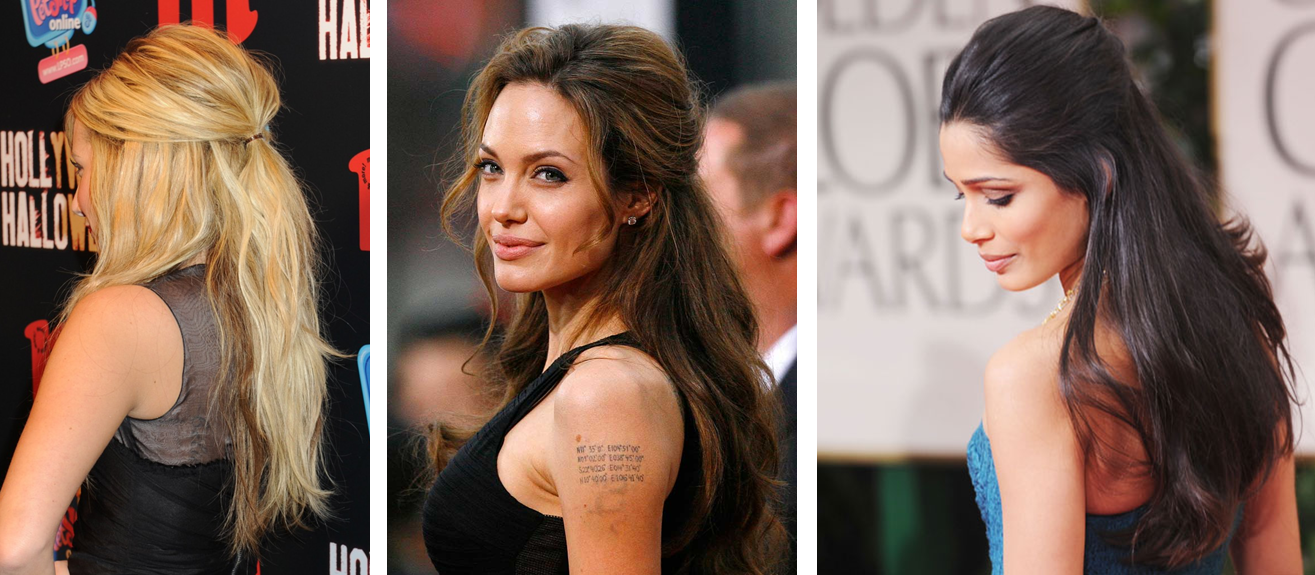
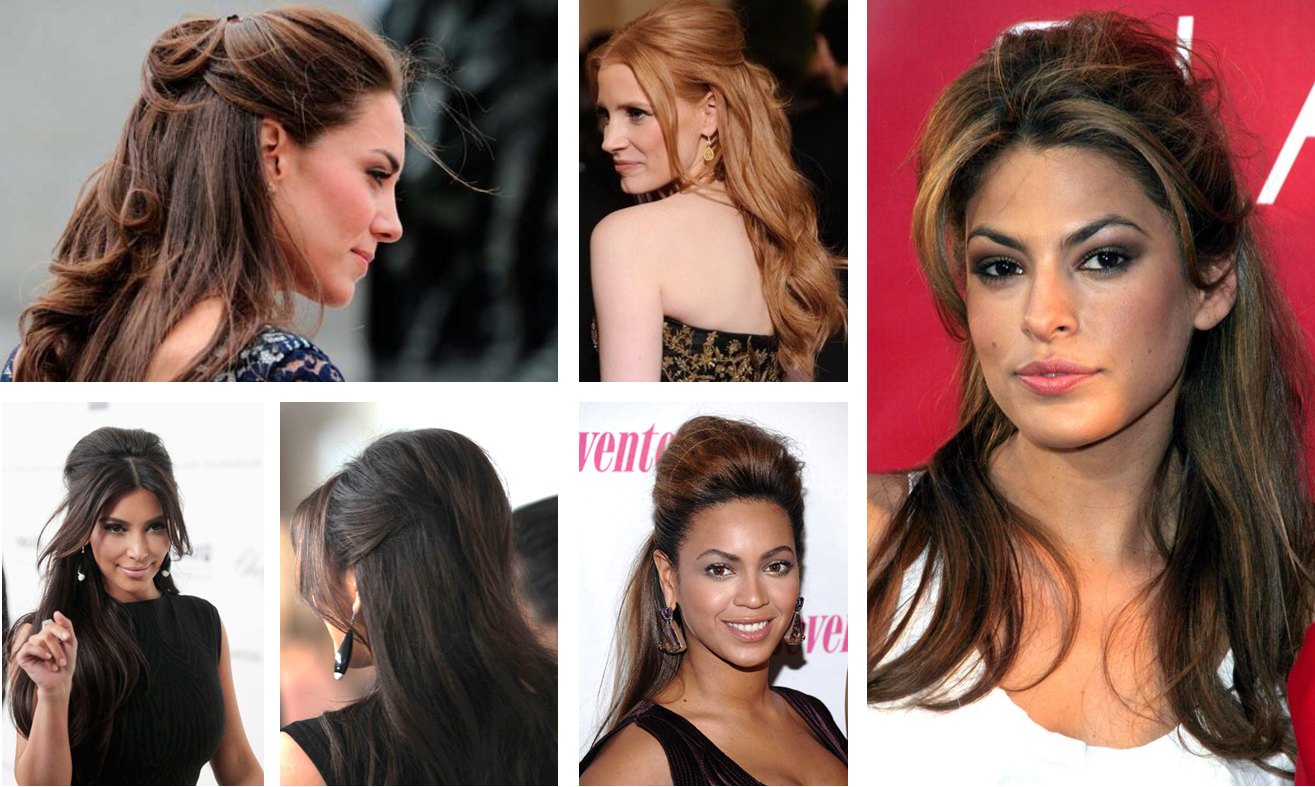
For a couple of years now I've realized just how much I am attracted to the hairstyle that most women call "half-up, half-down" or more simply, "half-up." Whatever it is called, I love it when girls wear their hair the way the women in these pictures are wearing it. It is extremely sexy and elegant at the same time, and immediately draws me to a woman. It is almost uncanny how much it affects my judgement of a woman's appearance. I find myself checking out bigger girls who are wearing their hair that way, or losing interest in (previously) attractive women once they change from that hairstyle to another, or else staring at a picture of a normal girl, not understanding why I am attracted, only to eventually realize that her hair is half-up.


I've thought a lot about why I like it so much, but nothing makes sense. I've never dated a girl who wore it that way often, or even had a crush on one who did. My mom or sisters never really wore their hair like that, my babysitters didn't, my teachers didn't - no one did. The only semi-believable reason I can think of is that some of the female Disney characters (who for most men my age were the first icons of female beauty) wore their hair like that, and maybe left an impression on me; though I don't remember being particularly attracted to one more than any of the others. It isn't an overly popular hairstyle in the United States. In fact, it is practically never worn in comparison to, say, Turkey and Italy or Lebanon (and probably other Mediterranean countries), where it is extremely popular.*

In any case, this has puzzled me enough that I've started asking my male friends what they think about this hairstyle; and I've been surprised to hear how much they agree that it is really attractive. In other words, maybe it isn't just my personal taste.


So here is what I would like you to do: the next time you go out, wear your hair in some variation of the "half-up" style depicted here, especially if it is not a style you usually wear. Go out like you normally would and pay attention to what happens. Then, in the comments of this post, report your findings. Let me know what comments you receive - positive or negative - and let me know if you had more or less (and better or worse) attention from men. You can also comment on the type of men if you notice a trend. Get your girlfriends to do the same on another night (so that you aren't all wearing the same hairstyle - awkward) and see how it works for them, or have them leave their own comments.

As motivation, here are some thoughts about how participating in this experiment could benefit you:
  1. You might discover a hairstyle that looks good on you.
  2. I've been told it is an "easy" hairstyle to make and wear.
  3. By taking a fashion risk, you will better understand what hairstyles look good on you.
  4. You will expand your comfort zone, and therefore your confidence.
  5. Because this hairstyle is not very popular in the countries that most of my readers are from, you will most likely stand out from other girls - in a good way.
  6. You will contribute to the pool of knowledge about what men like.
I'll look forward to seeing the results.

_______________________________
* The fact that all of these countries are more sexually polarized than the United States is another hint at what I suspect might be the reason why men find it so attractive.


Tuesday, September 18, 2012

A Tool for Learning Makeup

In the post I made called How to Avoid Looking Fake, I pointed out that a girl needs to understand what kinds and tones of makeup work with her face and complexion in order to avoid the "caked on" makeup look, which men find unattractive. A reader recently recommended a website called TAAZ.com that actually allows users to apply virtual makeup to a photo of themselves in order to get an idea of what will look good. You can also try different hairstyles. In fact, the website is very similar to the one I recommended in the post How to Improve Your Hair (www.thehairstyler.com), but with a focus on makeup rather than hair - and the added benefit of being able to do both.

Here is the link to the website: www.taaz.com

As with www.thehairstyler.com, the visualization tools aren't perfect, but as you can see in the examples below, you can definitely get general ideas about how various colors work (or don't work) with your personal look. Whether you are just learning how to optimize your look, or want to revisit it, this website can be an invaluable tool. (And don't be so sure that you already know everything about your own makeup - self-perception is remarkably inaccurate at times.)


Related Posts
1. How to Avoid Looking "Fake"
2. How to Improve Your Hair
3. Your Skin Color Matters
4. Hair and Makeup Variety

Monday, July 30, 2012

Katy Perry is Brainwashing Women

I recently watched the music video for Katy Perry's song Part of Me (I was just hoping she would look hot in it).


I was sorely disappointed by her looks in the video, but more importantly, the story line also bothered me. It didn't take me long to realize why...

After apparently being cheated on, Katy Perry dumps her boyfriend (which is smart), and then decides to overcome the emotional pain by cutting her hair, joining the military and being "tough" and independent. I am hoping the not-so-subtle message of the video is less catchy than the song (which is still stuck in my goddamn head...), because it essentially says "if you are hurt by a man, an appropriate and liberating response is to de-feminize yourself."

Nothing could be further from the truth. No reaction to rejection will damage your chances with other men more (especially if you cut off your hair like she does in the video). A woman who responds to rejection by becoming more masculine is like an athlete who responds to a difficult loss in sports by intentionally injuring himself or skipping trainings and practices - it is absurd. The athlete damages the body or lose the skills that made him a competitive athlete in the first place, just as like Katy Perry throws away the disposition and looks that attract men the most. She gains her personal independence at the expense of attracting men. That is to say, by throwing away her femininity and closing herself to male companionship, she sacrifices the potential for long-term happiness in a good relationship (however difficult it might be to find) for the momentary happiness of personal "liberation."

When a message like this is surrounded by a catchy song and a flashy music video with a famous celebrity, it is inevitably romanticized, and the message can be difficult to divorce from its medium. Be careful about getting sucked in.

Tuesday, May 15, 2012

How To Avoid Looking "Fake"

In the post You Can Control How Attractive You Are, I reiterated the point that most unattractive women aren’t genetically unlucky, they just aren’t trying hard enough. Recently, a reader brought up a good question in the comments section of that post: how far can a girl go to fix up herself before she is considered "fake"?

The question is a good one because at first glance, looking fake seems to be what happens when a girl tries too hard. We’ve all seen girls with caked-on makeup, boob jobs, spray tans and shitty hair extensions; and we’re all familiar with the male consensus about them – they look terrible. In fact, you probably don’t even need men to tell you this. So how do you avoid it? How do you strike a balance between “not enough” and the “fake” extreme?

The problem with this question is that it is based on a misunderstanding. It wrongly puts “ugly” on both ends of the effort scale, because it presumes that the girls with boob jobs, thick make-up and cheap hair extensions are putting in a lot of effort. This is decidedly not the case. These girls haven’t put in more effort than the average girl. Layering on make-up, or sitting in a tanning booth longer than necessary – while it does take more time – is rooted more in confusion than concerted effort.

These women are like a chef who is obsessed with a single spice – salt, or garlic, or thyme, or whatever. True, these spices all have their proper place, and can make a meal outstanding when placed on the right dish in the appropriate quantity. But in excess they destroy all dishes. A woman who layers makeup is like a chef who dumps inordinate amounts of garlic in everything he cooks. Neither the make-up girl nor the garlic-chef understands the concept of moderation or balance. The girl ends up looking “fake” and the chef has every other plate returned by unsatisfied customers. Although there is a certain amount of added effort involved in the additional mirror-time, or the extra crushing and dicing of garlic cloves, you don’t need me to tell you that both the make-up-obsessed girl and the garlic-obsessed chef are poor role models.

Sarah Harding

The mistake is a preference for quantity rather than quality. Too much effort does not result in a “fake” appearance, uneducated effort does. The chef who understands balance and complimentary tastes has invested orders of magnitude more effort and time in reaching that expertise than the one who simply saturates everything with salt. And the girl who realizes that her natural complexion only works with certain make-up tones, or knows how to suit her hairstyle and cut of clothes to her face and body shape has likewise invested miles more time and energy in her look than the girl who just cakes on extra make-up, or resorts to a boob job to enhance her chest. If you think that “more effort” means “more make-up” or “more tan,” you are spending your smarts in the wrong place – or rather, you aren’t spending them at all.

Nicola Roberts
If you really want to improve your look, you need to become your own stylist. You need to learn how to make your hair shine, and how to add volume in the right places. You need to study your body shape and try different outfits until you know precisely what cut makes your features pop - or subdues them, if necessary. You need to read books on color, and try every shade until you know which ones are your best. You need to learn everything you can about fitness and dieting so that your time in the gym is efficient and your meals compliment your workouts. You need to push your comfort boundaries with different styles, perhaps looking awkward occasionally just to rule out the possibility that your aversion to a certain style is really based in its inappropriateness for you – and not some childhood prejudice. You need to fix your posture and get serious about sleeping right. You need to watch how much you drink and learn how to care for your skin.

I am not suggesting that every girl should obsess over her appearance, but you see what I mean. This is real effort – not the “extra garlic” approach, which results in the fake look we are all so familiar with. Be smart about your efforts and, generally speaking, the more effort you put in, the more you will improve your look, not compromise it.

Saturday, March 17, 2012

How to Improve Your Hair

Kate Middleton
I am not an expert on women's fashion, let alone something so specific as hair. However, even the simplest observations about style can be difficult to make in the first person. I have the advantage of being in the third person, as well as being male and therefore having a good grasp of what is attractive to men. Here's what I have noticed about women's hair:

1. Time. This is the most common mistake women make when it comes to their hair. The women with bad hair are invariably those who are unwilling to put in the time it takes to make it look good. I use the term "mistake" loosely, because it is obviously a matter of personal preference. More often than not, "I don't have time" actually means "it isn't a priority." But priorities often change once the relative importance of the viable options is made clear. In this sense, a more important post than this one might be the one I wrote about the importance of hair. I am not interested in giving unsubstantiated moral imperatives, so I won't say that a woman should spend a given amount of time on her hair. However, I will say this: if you aren't spending at least 20 minutes a day on your hair, you aren't looking your best. Considering how important hair is to your overall appearance, and how easy it is to control, it makes sense to spend at least that much time on it - assuming you are interested in maximizing your chances with men.

Shakira
2.  Length. Long, full hair exudes vitality. It is beautiful, elegant,  vibrant, sexy. It is the most prominent and recognizable indicator of femininity, and it transfixes the attention of men. I've often wondered if the story of Samson was originally written about a woman, because a woman without her hair is like a woman robbed her of life-force. Yes, there are a few men out there that claim to like short hair. (I am actually skeptical that they are being honest with themselves. I wonder if they once had a crush on a girl that wore it short, and therefore think they like it on all women). But their number is so low that it is statistically negligible and warrants no attention. Keep the length between your shoulders and the middle of your back, and always err on the long side if you are unsure. Short hair on a woman is like a mustache on a man - while in very rare instances some people can look good in spite of it, they never look good because of it. Only use extensions if they blend so well that other girls have to look twice to realize you are wearing them. Otherwise it will just looks cheap and trashy. Grow it out instead.

3. Color. Just like your clothes, your hair color needs to work with your complexion. Your natural hair color is always safe, but not usually as fun as the alternatives - and certainly not as dynamic (see #6). You also have a fair amount of flexibility in this regard, because your hair is one of the features that defines your complexion. Most hair colors can be made to work, but you need to make sure that you change the color of your clothes accordingly, and stay within the limits prescribed by the other elements of your complexion. I've seen some women who clearly don't understand this concept, and the result is unnatural-looking and unattractive. For example, bleaching you hair does not mean that you also need to lighten your eyebrows, since this is liable to wash you out. Likewise, red hair is not likely to work if you have olive skin.

4. Texture & Style. Most women can successfully pull off a couple different hair textures and at least a few different styles. While both will be somewhat limited by your face shape (see #5), you will still have options within those limitations. Most men prefer women when they wear their hair down, but there are some cases when showing off your neck and shoulders (one of the most feminine parts of a woman's body) can outweigh the benefits of wearing your hair down. In any case, I've found that my guy friends all have different taste when it comes to texture and style. Some like frizzy hair, some like straight hair, some like wavy hair. There aren't many guidelines here, except those imposed by your face shape. For example, a hairstlye that flatters your jaw line might be impossible to pull off with straight hair. I will say that, in general, more volume is always a good thing. Full hair is healthy hair, especially if you can maintain the shine after adding volume through curling or some other means.

Minka Kelly

5. Shape. There are all kinds of internet resources for figuring out what hairstyle works best with your face shape and hairline. Use them, but remember the following when you do:
  • While the various shapes are broken into categories, some women fall in between two of the categories (in the same way that your complexion might be halfway between a "clear winter" and a "clear autumn"). Realizing this might help you identify your own shape.
  • Ignore anything that tells you that a short hairstyle suits you best (see #3). While it may be true that short hair compliments the shape of your face, a hairstyle's suitability to your face is far less important than looking feminine when it comes to attracting men.
  • You should consider not only the shape of your face in portrait, but also in profile. Here is a blog post that describes this: http://www.southernbritt.com/facial-profiles-hairstyles/


There is an article here: http://www.thehairstyler.com/features/articles/hairstyles/the-right-hairstyle-for-your-face-shape that makes an effort to illustrate the rights and wrongs of choosing a hairstyle. The website in general is interesting: they are trying to create a program with which you can visualize how you will look with different hair styles. While I think they need a lot of improvement on the visualization tools, the website (and the article in particular) at least helps you understand the underlying concepts. You can figure the specific applications for yourself. The general idea is to use the shape of your hair to give the impression of an oval-shaped head. For example, a woman with a square-shaped head would use her hair to round out the "corners" of her face, while a woman with a triangular face should use her hair to give the impression of added width to the top of her head and de-emphasize the width at the bottom.

7. Cleanliness. Dreadlocks and dirty hair are repulsive. I can't count the number of times my friends and I have seen a girl with dreads and all agreed how much we hated the way it looked. While a negligibly small percentage of guys might mildly attracted to the "look" it creates (hipster, etc.), there is nothing attractive about the hair itself, and I can guarantee you those same guys won't hold it against you if you wash your hair regularly. Your hair is most attractive when it projects an image of health. It does this when it is shiny, and it is shiny when it is clean. Full and healthy hair is an indication that your body is being supplied with the resources it needs to produce such hair (protein, vitamins, etc.), and also that you care about yourself enough to take care of it. Unclean hair implies a poor diet, bad genes, or apathy - none of which is going to attract your future husband. (Note that this does not mean you should necessarily wash your hair every day. In fact, this might do more damage than good in some cases.)

6. Dynamics. One of my favorite things about women is their ability to change their look. By coloring your hair differently or changing its shape and texture, you have dramatic leverage over your appearance. Your boyfriend or husband might like a particular look the most, but seeing the same thing every day is not something that the male mind is programmed to appreciate. If you can figure out a few different ways of doing your hair that he likes, switching among them periodically can offer your man some of the variety that he has given up by being in a committed relationship with you. As with everything else in life, you really only know whether or not something works by trying it out. Without taking risks, you will not improve.


Related Posts
1. The Importance of Hair
2. Hair and Makeup Variety
3. How to Avoid Looking "Fake"

Saturday, March 10, 2012

The Importance of Hair

Other than your physical fitness, your hair is the most important controllable aspect of your physical attractiveness. Most women know this. I am not a hair stylist, so others can give you much better advice than I about how to make your hair look its best.

However, it is worth underscoring just how critical good hair is to a woman's appearance. Rather than do this by compounding adjectives or superlatives, I want to recount the moment when I learned this for myself.

I had spent the night at my (now ex-) girlfriend's house and she was getting ready for work in the morning. She went into the bathroom to do whatever it is girls do to get ready. After a while, she came back into the room, looking gorgeous. I distinctly remember being turned on to the point that I  wanted to throw her back into bed. Actually, I maybe may well have; I don't remember now. But what I do remember was the epiphany that accompanied the following exchange:

"Did you do your make-up differently this morning?" I asked.

"My make-up?"

"Yeah, your make-up. It looks hot as shit, but something looks different for some reason. It's a more natural look or something. I really like it."

"I'm not wearing any make-up."

"Wait... what?" I asked, confused. "But you look...  wait, really? So what were you doing in the bathroom all this time?" I was scrutinizing her while saying all of this, and slowly became convinced that she really wasn't wearing any make-up.

"I was doing my hair." She answered. As soon as she said it I could see that it was her hair that was making her look so radiant. She'd washed it, straightened it, brushed it and pinned it half-up.

No one doubts how much makeup can improve your look. Hair matters more: don't underestimate the importance of grooming.


Related Posts
1. How to Improve Your Hair
2. Hair and Makeup Variety
3. How to Avoid Looking "Fake"
4. An Interesting Hair Experiment...

Sunday, December 4, 2011

Hair And Makeup Variety

This post used to link to a blog in which a girl had posted photos of herself everyday for a few years. The photos illustrated how much her hair and makeup could change her attractiveness. However, the girl asked me to remove the photos, since she decided to remove her project from the internet.

Monday, September 26, 2011

"Because Of" Versus "In Spite Of"

When you are evaluating what things or changes in your life have ostensibly made you more successful with or more attractive to men, make sure you consider them in light of the distinction between "because of" and "in spite of." The difference is not very subtle, but women (and men) miss its significance constantly. Let me illustrate with a simple example:

A girl cuts her hair short, and soon after, gets attention from men. She concludes that she gets attention from men because of her short hair, when the reality is that she gets attention from men in spite of her short hair. Her shorter hair is not causing her to get more attention; it just isn't unattractive enough to turn off the men that still approached her.

Another example: a girl gets a new dress and wears it out, and gets attention from a man. She thinks "This new dress really works," concluding that he gave her attention because of her new dress, when really she was just cute enough for him to hit on even though he wasn't a huge fan of her dress - that is, he hit on her in spite of the dress.


I think one of the reasons the confusion occurs is that we (men and women) are always eager to have found one thing or another that makes a significant difference in our attractiveness, and this wishful thinking helps us ignore the distinction I've just described. However, this is not the only reason we ignore it. Men make the mistake often when they evaluate women. If I point out a girl and say "That girl's hair looks bad," one of my male friends will often respond with something like "What? No way man, I think she's hot." But when I point out that she is hot only in spite of her short hair, not because of it, the guy making the comment will usually take a second look, reflect and then agree with me. So even when our own ego is not involved, we (as humans) still make this mistake. I think the most important reason for its occurrence is that there are so many factors contributing to attractiveness that they cannot all be easily considered in isolation.

Try these suggestions instead of relying on your perceived results:
  • When you are experienced enough with fashion, make your own decisions about what makes you more or less attractive.
  • Get your male friends' opinions, but make sure you call their attention to the specific change (Try "How does this shirt look on me? Would it look better if it were tighter?" not just "How do I look?"). Make sure it is a male friend that does not like you, because most men that like you will tell you what they think you want to hear.
  • When it comes to clothes, remember that almost every store has a return policy. Buy it, try it on a few times, and return it later if your (male) friends don' like it.
  • Do not solicit or consider opinions from your female friends, your relatives or your gay friends. All of these are strongly colored either by their inability to view you in a sexual light, or their desire to avoid offending you.
  • Ignore your hair dresser's opinion or (for clothes) the salesperson's opinion. Both have too strong an interest in your acceptance of their suggestions. It does not matter how friendly they are. In fact, you would be wise to trust them less when they are friendly.

Be especially careful of the distinction between "because of" and "in spite of" when you receive attention from men you have not met before, because they have no point of reference for your attractiveness (i.e. when you wore a better dress or had longer hair).

I am not suggesting that you reject the attention you get in these cases; I am merely warning you against jumping to the conclusion that new-found attention occurs because of a change you made recently, when in fact it only happens in spite of that change.