Showing posts with label look. Show all posts

Tuesday, April 7, 2015

Your Hand Can't Hide Your Ass

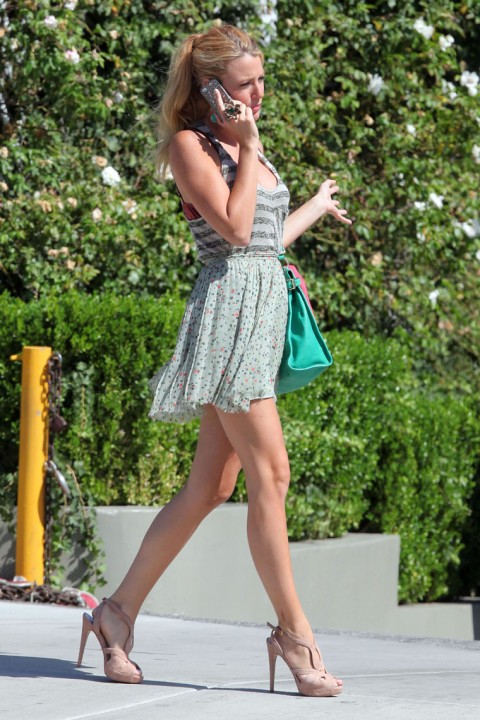
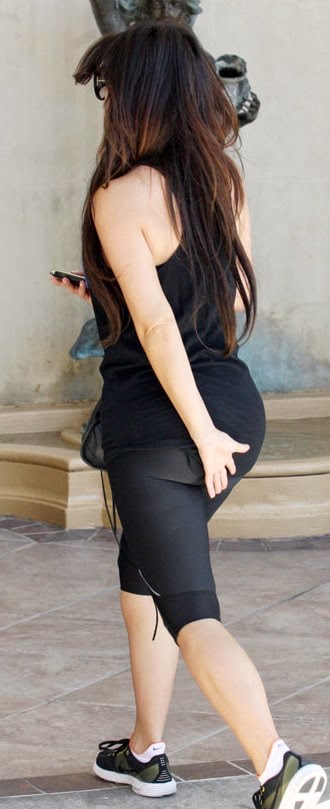
There's one thing some girls do that never fails to make me laugh. When they walk by a group of guys and suspect that the guys will check out her ass, they try to subtly drape their hand across their butt in an attempt to shield it from the guys' view. This is always funny because (a) it's never subtle and (b) it is absolutely ineffective. Although some girls might only be trying to "disrupt" the guys' view, rather than block it completely, it simply doesn't work. Whatever curve (or lack thereof) you might be successful in hiding on one side of your ass can just as easily be seen on the other. You'd have better luck trying to shade yourself from the sun with a broomstick.

But, as you might have guessed, I am not writing this just to remind your of your body proportions. No, there is something more important going on, and the attempt to hide your ass is just the symptom. By hiding your ass, you are either expressing insecurity about your body, or else you are showing your lack of comfort with male sexuality.

If you are trying to hide your ass because you don't like the way it looks, you are essentially saying "I am discontent with my body, so I am going to try to hide it." And I get that no one is completely content with their body; it's the hiding it part that is the problem. The alternative, of course, is to say "I am discontent with the way my ass looks, so I am going to do something to change it." By draping your hand across your butt, you are being dishonest rather than proactive. You are doing the same thing as the guy who, when asked by a girl what he does, tells her he "has his own company," when the truth is that he works at his dad's gas station for 50 hours a week and is making a weak-at-best attempt to start a website selling graphic t-shirts on the side. In the same way that he needs to start admitting what he really does with 95% of his time (and then doing something to change it if that makes him uncomfortable), you need to let men look at your ass for what it is, and then use the resulting discomfort as motivation for squats, lunges or dieting.

Granted, the guy who checks you out from behind probably isn't being completely honest either. If he were, he wouldn't wait until you passed to "steal" a look at your ass; he would do it while you are watching. Of course there is the practical consideration that a girl's ass can only be seen from behind, but this doesn't change the fact that most men are too scared or ashamed to express their sexual interest in a girl directly. Those guys probably liked your face or chest more than your ass, but checking those out would have required eye contact and revealing that they like you, which of course requires facing rejection. Anyway, just because most men are insincere in looking doesn't excuse you for being insincere in hiding. I am only saying so to point out that this isn't a gender-specific problem. 
Now, if, on the other hand, you are attempting to hide your ass in spite of being perfectly comfortable with the way it looks, there is only one explanation: you don't feel comfortable with male sexual desire. This might be because of its intensity, or because you don't really understand it* (perhaps because you have no experience with it), or it might be because your sister or friend is on the receiving end of it far more than you. Whatever the case, it makes you uneasy.

You might attempt to defend this uneasiness by saying that you "don't like being treated like a piece of meat," but this is just an example of clever semantics putting a negative spin on a phenomenon that is so natural that you couldn't - or more accurately, wouldn't - exist without it. Straight men who are unmotivated by an attractive female body are about as common as women who are unmotivated by the idea of commitment. Good luck finding them. You either need to get used to that idea, or get used to the idea of being single, because if you can't feel comfortable with the fact that a man feels sexually attracted to the curves of your body, you can't feel comfortable with men.

Let me be clear here: I am not trying to defend men who only care about a woman's looks (who, by the way don't exist - but this is the topic for another post), and I am not trying to defend rude or crass expressions of male physical desire, like cat-calling or groping. But I am trying to point out that it isn't normal or healthy for women to walk around constantly worried about whether or not men are looking at their asses. And it certainly isn't normal to awkwardly pretend that your limbs happen to be in conveniently "concealing" locations when they have no natural business being there.

So if you are one of the girls doing this, realize that men know what you are trying to do and it doesn't work. And if you want to dig a little deeper, recognize it as a sign of a psychological kink that you need to work on.

----------------------------------
*Many men have a similar discomfort with the reciprocal, which is female emotional desire.


Thursday, February 20, 2014

There Is Nothing Modest About Loose Jeans

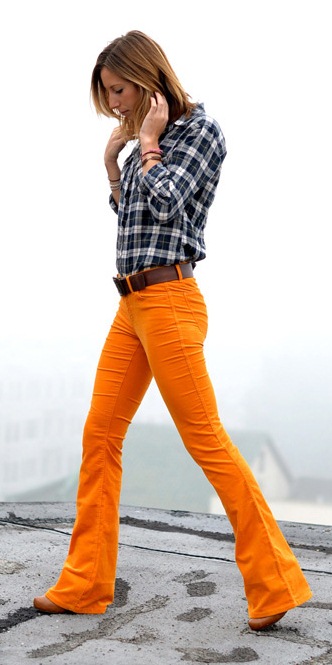
Every now and then I meet or see a girl wearing loose jeans. By "loose" I don't mean that the crotch is sagging around her knees, I just mean that there are places on her hips, ass and upper legs where the fabric is not touching her skin. I suspect that girls do this for one of three reasons:

(a) They think their figure isn't attractive enough to wear tight jeans.
(b) The think that tight jeans are immodest.
(c) They don't care about their appearance and loose jeans are more comfortable.

I realize I won't convince group (c) of anything, so I am only going to address (a) and (b). Let's start with group (a)...

No matter how fat you are, or how badly your ass is shaped, loose jeans make it look worse. Tight jeans might not make your ass or legs look good, but loose jeans will make you look like a man.

As for the group concerned with modesty: you need a reality check. Tight jeans are not provocative; they are normal. Despite what your parents probably raised you to believe, modesty is not something objective. What looks "appropriate" or "slutty" or "conservative" changes significantly depending on two things: context and social norms.

If you were to walk down the street of your city in a bikini in the middle of winter it would shock people and look slutty. Any man who saw it would be turned on. But on the beach, bikinis are normal. Men are much less turned on by them because they are expected. They don't look slutty at all. This is what I mean by context.

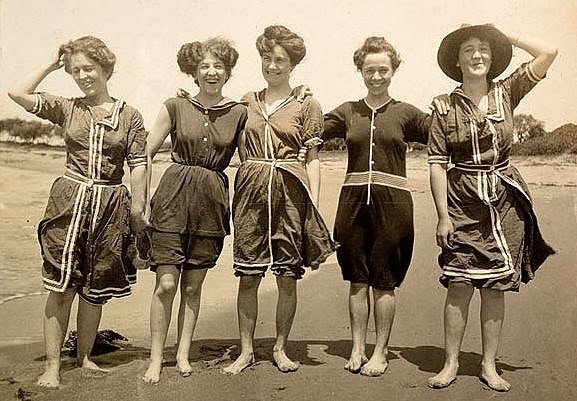
In Victorian times, swimsuits were less-revealing than most women's dresses are today. Today, swimsuits are more revealing than most women's underwear in Victorian times. Dress-like swimsuits didn't seen slutty or over-conservative in Victorian times, and neither do bikinis today. This is what I mean by social norms.

Here is the thing: modesty isn't a function of the quantity of skin you show, or the tightness of the clothes you wear; it is defined by how much your outfit makes men (or people in general) think that sex with you is imminent. The more you incite in men the thought that they can bang you easily, the less modest your outfit is. This is why short dresses are so much more sexual than pants. Men see you in a short dress and part of their subconscious recognizes that your vagina is essentially exposed (i.e. from the bottom). Sex seems much more accessible and immediate because there is only one thin layer of clothing covering the most sexually intimate part of your body.

But the threshold for triggering a man's thoughts of sexual proximity - the criterion for immodesty - is entirely relative to social norms and context. The man on the beach doesn't think sex is imminent when he sees you wearing a bikini, because every woman on the beach is wearing in a bikini, and he knows it is for swimming or sunbathing. But in 1910, if a man saw a woman on the beach in a bikini, he'd be sure that she was a woman of loose morals - and he'd probably be right.

Anyway, the point here is that wearing tight jeans in everyday American life is about as shocking as wearing a bikini on the beach in 2014. And wearing loose jeans in everyday American life is far more similar than you think to wearing a Victorian bathing costume to a Las Vegas pool party. Perhaps more importantly, when you use your clothes rather than your behavior to be modest, you are far more similar than you think to the girls who use their clothes rather than their behavior to get sexual attention. Don't be so sure that you are more intelligent just because you made the mistake about modesty rather than sexuality.

Is there an opposite extreme, where tight jeans start to look like a bikini on a Victorian-era beach (i.e. slutty)? Yeah, probably, but that's not the point - there are always excesses on both extremes. Today I happen to be calling out the conservatives.

So remember: wearing loose jeans doesn't avoid the wrong kind of attention; it just makes you look terrible.


Related Posts
1. "The Wrong Kind of Attention"
2. How to Get "The Right Kind of Attention"
3. Don't Wear Sneakers
4. The Most Important Time to Dress Well

Monday, February 4, 2013

The Importance of Taking Fashion Risks

In response to our instinct for self-preservation, we, as humans, cling to what is safe. Even when we recognize the benefits that can be afforded by a departure from our normal course of action, we find ourselves bound to what is familiar. In restaurants we only order foods we grew up eating so that we don't have an unpleasant meal or have indigestion - even though we might be missing out on the most incredible, exotic foods. We practice the accepted politics in our state because it feels good to agree with everyone, even if our mind and experiences tell us that the truth is otherwise. We stay on the marked trails when we hike up a mountain so that we don't tread on loose rocks and sprain our ankles, even though there is a stunning view to be found just behind the rock outcropping in the distance.

To a certain extent, this inclination is a good thing. By following established paths in life we avoid making serious mistakes, and circumvent discomfort or personal harm. However, the instinct is an excessive one; it affects us more than we actually need in order to stay safe. The instinct for self-preservation essentially tells us to avoid doing anything dramatic, because it recognizes that dramatic action can lead to personal endangerment - whether it be physical, financial, social, moral, intellectual or otherwise. But dramatic action is also necessary for greatness, it is a prerequisite for unique success. Unless we stray from the normal path, we wallow in mediocrity.

So the instinct for avoiding dramatic action, although it is self-preserving, also happens to be self-limiting. Although I might have job security at my family business running the local shoe store, I won't be able to pursue the chance of becoming a world-renowned architect unless I break away from what is safe. A woman might know for a fact that her current, mediocre boyfriend will marry her and provide for her if she stays with him, but only by taking a risk and breaking up with him does she enable herself to meet someone she feels a real connection with. Even though a man might face embarrassment and rejection by approaching a beautiful woman, he won't ever meet someone so attractive if he doesn't risk being turned down.

We've all read or heard the famous quotes about the importance of risk-taking, and we all understand that it is important factor in personal success. But we normally limit our consideration of this phenomenon to ostensibly "big" things, like moving to a new country, taking on a huge and uncertain project, or speaking in front of hundreds of people. It isn't the kind of thing you usually think of in relation to something as simple as fashion or style, but it applies just as much - if not more so, in the sense that your personal style is something that you have to make decisions about on a daily basis, and constantly communicates all kinds of things about yourself to others.

Over the holidays, my little brother asked me if he could borrow a pair of pants to wear out, since his were all in the laundry. I suggested he could wear a pair of gray chinos I'd just bought, since they worked well with the shirt he wanted to wear.

He balked.

"Gray chinos?" he asked. "That's weird, I've never worn something like that before..."

I knew exactly what was going through his head. I'd been there a hundred times before, especially five or six years ago when I first decided to learn how to dress better. I knew how to convince him, but I also knew I needed to start with the facts, with the practical reasoning.

"I know you haven't," I told him, "but they'd fit you perfectly and they will go well with the other stuff you're wearing. See? The gray is warm, just like the colors in your shirt, and you can wear these shoes with them too; it'd look sharp."

It really was a perfect look for him. Granted, it was a departure from the jeans and t-shirt he normally wore at college parties. It was a little more formal and more mature looking, but I knew it would look great on him. Unsurprisingly, he was still hesitant, so I cut to the heart of the matter:

"Trust me on this one. You are going to feel weird as shit for the first couple hours, but eventually that will wear off. An hour after we get to the bar, you won't even remember that you are wearing them. Then tomorrow you'll see photos on Facebook from the night, and you'll realize that they actually looked damn good on you. Next time you won't think twice about throwing them on - in fact you'll probably look forward to it. You just need to soak in the initial awkwardness until it passes. Until then, you can't judge the way they look on you objectively. In the meantime, take my word for it. I know you respect my dress sense."

I must have been convincing because he took my advice. He looked awesome, as was evidenced by the fact that he got hit on twice that night by older women (this is a lot for a guy, by the way).

Everyone with an once of pride knows the feeling that went through my brother's head. The social risk of wearing something outside your comfort zone can be intimidating. You feel like everyone is noticing your clothes or shoes or hair, but you are uncertain of what they think. You just don't feel "at home" in your own clothes. It's awkward as hell. It's the feeling that kept an old coworker of mine from buying a new pair of jeans, even though the ones he constantly wore were several years old and threadbare. It is the same feeling that kept me wearing sneakers in all casual and even semi-formal circumstances, long past an age at which it was appropriate. It is the feeling that you might experience when trying to change your look from cute to sexy, or when you consider wearing heels in everyday circumstances, or adding lace to your outfits, or dressing up for casual activities.

However it is manifested, what you are feeling in these situations is the inclination towards social self-preservation, towards the avoidance of social catastrophe. The instinct prevents you from fashion faux-pas and wardrobe-related embarrassments, but it also prevents you from learning how to dress and from looking your best. Next time you try to make an improvement to the way you look, make an effort to soak in the awkwardness of what you are attempting before ruling it out.


Related Posts
1. Sexy Versus Cute
2. One Way to Improve Your Look
3. How to Avoid Looking "Fake"
4. "Because Of" Versus "In Spite Of"

Tuesday, May 15, 2012

How To Avoid Looking "Fake"

In the post You Can Control How Attractive You Are, I reiterated the point that most unattractive women aren’t genetically unlucky, they just aren’t trying hard enough. Recently, a reader brought up a good question in the comments section of that post: how far can a girl go to fix up herself before she is considered "fake"?

The question is a good one because at first glance, looking fake seems to be what happens when a girl tries too hard. We’ve all seen girls with caked-on makeup, boob jobs, spray tans and shitty hair extensions; and we’re all familiar with the male consensus about them – they look terrible. In fact, you probably don’t even need men to tell you this. So how do you avoid it? How do you strike a balance between “not enough” and the “fake” extreme?

The problem with this question is that it is based on a misunderstanding. It wrongly puts “ugly” on both ends of the effort scale, because it presumes that the girls with boob jobs, thick make-up and cheap hair extensions are putting in a lot of effort. This is decidedly not the case. These girls haven’t put in more effort than the average girl. Layering on make-up, or sitting in a tanning booth longer than necessary – while it does take more time – is rooted more in confusion than concerted effort.

These women are like a chef who is obsessed with a single spice – salt, or garlic, or thyme, or whatever. True, these spices all have their proper place, and can make a meal outstanding when placed on the right dish in the appropriate quantity. But in excess they destroy all dishes. A woman who layers makeup is like a chef who dumps inordinate amounts of garlic in everything he cooks. Neither the make-up girl nor the garlic-chef understands the concept of moderation or balance. The girl ends up looking “fake” and the chef has every other plate returned by unsatisfied customers. Although there is a certain amount of added effort involved in the additional mirror-time, or the extra crushing and dicing of garlic cloves, you don’t need me to tell you that both the make-up-obsessed girl and the garlic-obsessed chef are poor role models.

Sarah Harding

The mistake is a preference for quantity rather than quality. Too much effort does not result in a “fake” appearance, uneducated effort does. The chef who understands balance and complimentary tastes has invested orders of magnitude more effort and time in reaching that expertise than the one who simply saturates everything with salt. And the girl who realizes that her natural complexion only works with certain make-up tones, or knows how to suit her hairstyle and cut of clothes to her face and body shape has likewise invested miles more time and energy in her look than the girl who just cakes on extra make-up, or resorts to a boob job to enhance her chest. If you think that “more effort” means “more make-up” or “more tan,” you are spending your smarts in the wrong place – or rather, you aren’t spending them at all.

Nicola Roberts
If you really want to improve your look, you need to become your own stylist. You need to learn how to make your hair shine, and how to add volume in the right places. You need to study your body shape and try different outfits until you know precisely what cut makes your features pop - or subdues them, if necessary. You need to read books on color, and try every shade until you know which ones are your best. You need to learn everything you can about fitness and dieting so that your time in the gym is efficient and your meals compliment your workouts. You need to push your comfort boundaries with different styles, perhaps looking awkward occasionally just to rule out the possibility that your aversion to a certain style is really based in its inappropriateness for you – and not some childhood prejudice. You need to fix your posture and get serious about sleeping right. You need to watch how much you drink and learn how to care for your skin.

I am not suggesting that every girl should obsess over her appearance, but you see what I mean. This is real effort – not the “extra garlic” approach, which results in the fake look we are all so familiar with. Be smart about your efforts and, generally speaking, the more effort you put in, the more you will improve your look, not compromise it.

Saturday, April 7, 2012

Be Careful About Wearing Large-Shouldered Tops

Tops, dresses or jackets that make your shoulders look larger do two things: they diminish your waist and broaden your shoulders. You should always be cautious about wearing them because broad shoulders are unattractive on a woman. It is true that a small waist is attractive; but in the same way that wearing short hair to compliment your face shape is offset by the side-effect of making you look masculine, attempting to make your waist look thin by wearing tops with wider shoulders does more harm than good when it comes to attracting men.

Large-shouldered tops were popular in the United States in the 1980s because by that time the effects of feminism had trickled into professional environments, and women wanted clothes (specifically, suits) that made them look more commanding, more assertive - more traditionally masculine. Towards that end, I am sure they were successful; but I am equally sure that they did and still do make women much less attractive. And now, partially out of nostalgia for the fashions of a former generation, and partially due to social inertia, contemporary style calls tops with "puffy" or accentuated shoulders acceptable, "fun" or even attractive. Don't be sucked into the lie. The truth is that they are always risky, usually ugly and almost never a good idea.

If you think any of the women on the left look attractive, read the post titled "Because Of" vs. "In Spite Of". (All three are in good shape and their clothes fit well in all places but the shoulders.)

Clothes that slightly accentuate the shoulders might be mildly attractive on a girl that does not have a small waist-to-hip ratio; but in general, large shoulders make you look like a man and should be avoided.

Remember: whether consciously or subconsciously, men notice.

Wednesday, November 16, 2011

Your Skin Color Matters

If you want to make yourself more attractive, you need to focus on three things when you are choosing your clothes: style, fit, and color. The need for a suitable style is obvious to most people - your clothes should reflect or magnify your personality. Simple enough. The need for the right fit should be obvious, but it is apparently less so to many women (and men). Too many people don't wear clothes that flatter their figure. However, color is the most misunderstood and neglected of the three, and it is arguably the most important.

In the same way that your clothes need to work with your shape and personality, they also need to compliment your color, or more specifically, your complexion, which is the combined appearance of your skin tone, eye color and hair color. Have you ever noticed how Latin and Mediterranean women almost always look amazing in red and black? or how middle eastern women look far better in the deeper shades of most colors (navies, olives, maroons, etc. as opposed to blues, greens and reds)? If so, you've noticed the effect of color working well with complexion. This effect has been studied, broken down, and rebuilt into a science for more than 100 years by students of fashion and cosmetology.

Here are a couple examples. Note how Courtney Cox and Katherine Heigl look better on the left, where they are shown wearing colors that work well with their complexion. The effect is subtle but it is strong.


If until now you've chosen colors based on something you saw a friend wear, or colors you "just like," there is a good chance you look bad in them. Men notice this, even if only subconsciously. If you haven't taken the time to learn what colors make you look best, you are throwing away potential attractiveness, and therefore undercutting your chances with men. I've observed in many instances that a woman is far more radiant and attractive due to her choice of a color that magnifies her natural beauty. The effect is significant.

I won't tell you how to choose your best colors, because there are other resources that can tell you far more than I. My main goal is to simply to convince you that color matters. But I can point you in the direction of a couple of those resources...

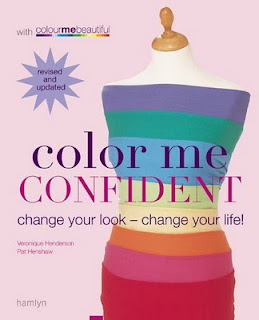
The best book I've found for women about color is called Color Me Confident. I bought a few different ones for men and women, and this one blew the others away (as did its counterpart for men). I like it because it uses modern celebrities as examples, does a good job of explaining the categories it uses to group complexions, and also has sections about the fit of clothes and makeup as well.

This book could reliably be your only resource. However, I have one other suggestion. Find a female celebrity that has your complexion (including eye color, which makes a lot more difference than you'd think) and spend some time looking at images of her on the internet, paying close attention to the colors she wears. Try the following: do an image search for her name and a color, and scan the results. Pay attention to how many instances there are of her in that color. Just as importantly, pay attention to what doesn't come up when you do these searches - i.e. the colors for which you cannot find many instances. Take Penelope Cruz for example. Click on each of the following image search links and notice how the results show whether or not the respective color (and what shade) works for her, based on the collection of images that appear in the search results:

Penelope Cruz Red 
Tons of instances of her wearing red, and she looks smoking hot in it (Latin women...)
Penelope Cruz Blue
Plenty of instances of her wearing blue, but notice how in most it is navy rather than a lighter shade
Penelope Cruz Orange
Basically just one orange dress, and notice how it is a burnt orange rather than bright

There are also a ton of websites out there that either describe how to choose colors that work for you, or else offer online (or in-person) consultations. There are some good videos on YouTube as well. While searching for some of the pictures above I bumped into a few good blogs, which have a lot of examples of color done well, as well as explanations of the theory. Take a look:
http://seasonalcoloranalysis.blogspot.com/
http://12blueprints.com/
http://www.prettyyourworld.com/

While it should only take an hour or so to learn the principles and figure out what are your best colors, it can take much longer to implement them in your wardrobe. It won't be easy to overcome some of your misconceptions. Someone may have told you once that pink was your color (for example), and you've worn it ever since, convinced by the confidence of their compliment that it made you look good. But their statement may very well have been wrong, in part or completely - even if you thought they knew what they were talking about when it came to fashion. Maybe they just wanted to make you feel good. Treat every color (or color combination) as suspect until you know it really does work on you. Be prepared to throw some of your clothes away.

I know these things because I paid no attention to my own color for years, and my appearance suffered because of it. Sometimes I would put on a shirt and recognize that it looked good on me, but I would never know why. Frankly, I never really wondered - I was just content that it did look good. And when I finally learned about the need to address my complexion and learn what looked best on me, I started to realize why those shirts had looked good. In fact, my memory of those instances eventually served as examples in figuring out which complexion I had and what would work well with it.

So if you aren't up to speed on your color, go buy the book, do some research online, and hit the mall. Men notice, and it will make a difference.

Monday, October 10, 2011

The Importance of Heels

Heels are the single most powerful item in a woman's wardrobe for improving her attractiveness to men. I routinely recognize this when I go to nightclubs, where almost all of the girls are wearing them. I also notice it at work, where some of the women occasionally wear them, and I find myself suddenly taking a second look (normally I wouldn't look once, as they have about 20 years on me and need to work out). While having a general knowledge of clothing fit and color (for example) matters more, it is not a single item than can be put on or removed with the same simplicity of heels. Heels require no instructions. Most women understand the effectiveness of heels to a degree, but too few realize why and how well they work, and therefore have trouble using them to their full potential.

Some women believe that heels are effective because they make a woman's calves look good, and although this isn't entirely wrong, it falls short of the truth. The majority of women think heels are attractive because they make a women taller. But men are not attracted to women because they are tall. This may make a girl look imposing or powerful, but any student of the most basic aspects of sociology knows that men are not attracted to power (women are attracted to power). Men are attracted to sexual pleasure and fertility, so it should not be surprising that the potency of heels lies in their ability to make a woman look sexual, even if only mildy so.

When a woman wears heels, it points her toes down in a more graceful manner, makes her butt stick out, and pushes out her chest. Most importantly, it arches her back, which emphasizes her feminine curves, and is an unequivocal sign of intense sexual pleasure. Look through the ads in magazines like Cosmopolitan or Maxim if you are skeptical. In many of them (and all of them intending to display sexuality), the women are posed in such a way that they resemble at least one of the postures I've described. All of these are strongly attractive to a man, but they are also very subtle, which makes them all the more effective. Most men have no idea why a women looks better to them in heels; they just feel it in their gut. Ask them. You'll probably get a shrug and something like "because they make you taller?"

For the taller women out there, yes, you are at a slight disadvantage. Despite how much heels improve your posture, I recommend you not wear them very often if they make you more than one inch taller than most of the men you want to attract. Find your other strengths and do what you can to highlight them (for example, height probably means you have long legs, so work them out a lot and make sure you are showing them off).

For all of the other women out there, and especially those of you who are short or the perfect female height, wear them frequently, and be liberal about deciding when they are appropriate. Just like a man that comes dressed well to a casual event, a woman stands out when she wears heels at a dive bar or in the grocery store.

Sunday, October 9, 2011

One Way To Improve Your Look

I am working on a couple posts about female appearance, and while doing some online research for them I came across this website:

http://lookbook.nu/


In the creators' own words, Lookbook is "a utility that allows members to document their evolving style & a collective gallery from which 'lookbookers' and non-members can draw daily fashion inspiration." Basically, it is a website where anyone interested in fashion and dressing well can create a profile and post photos of themselves in various outfits. The viewers can rank the images, or "looks," and there are lists of the highest ranked pictures, and in some cases, information about the clothes that are worn in the photos.

The feature of the site that I found most interesting, however, is one that I think could be infinitely useful to any girl trying to define or improve her personal look: the site suggests other users with a look similar to the one you are currently viewing, so that if you find a girl with a style you like, you can follow the suggestions to see more examples of the one that peaked your interest. By viewing many variants of your favorite look, you can more easily identify the elements that create it, and then duplicate them yourself. Whereas without this site you would only get to see instances of a given look rarely and by chance, now you can seek out many of them in a single location.

The other good thing about this site is that it gives you the opportunity to compare the same person in different outfits, and see what works and what doesn't. The observant user can learn some important lessons about fit, color and style just from browsing the galleries.

A word of warning though: a healthy portion of the people that go to the trouble of posting on sites like this are more interested in dressing fashionably than they are concerned with looking good. (No, the two do not always overlap, because female fashion trends are controlled by women and gay men.) Because there is no filter on what gets uploaded, trusting this site blindly is like trusting Wikipedia blindly - it isn't recommended, and you should always get a second opinion. But also like Wikipedia, the open format brings in far more useful information than any closed format ever could, and that enables the site to exist. Anyway, you will see a lot of weird bullshit along with the good stuff. As you browse, just remember that classics become classics for a reason.