Showing posts with label attention. Show all posts

Monday, June 30, 2014

The Importance of Variety in Your Appearance

There is a girl in my office that is extremely attractive. She is good-looking, but she is much more than that. She has great posture, always fixes her hair well, smiles frequently, is confident, and she generally radiates an air of femininity that is painfully lacking in many girls’ demeanor.

One thing that always stands out about this girl is the way that she dresses – specifically, the variety of clothes she wears. Every day she wears something completely different. In fact, I don’t think I have ever seen her wearing the same thing twice. I am not making a statement about the quantity of outfits she owns or the size of her wardrobe; I know plenty of girls who wear different outfits every day but still look boring. This girl actually looks different every day. One day she will be wearing jeans and a blouse, the next day she will be wearing a long, close-fitting dress, the next day cotton dress-pants with a loose, flowing top, and the day after that a pencil skirt. I've seen this girl wear clothes and dress types that I didn't even know existed. I realize that might not be saying much coming from a guy, but the point is that she is very clearly an outlier relative to other girls when it comes to the variety of clothes she wears.

It would be hard to underestimate how much men love this – and I say that with confidence because I've talked about it with several other guys and they agree categorically. Her daily choice of clothes is the topic of our lunch conversation more often than is probably healthy. It’s worth pointing out that this attention isn't the wrong kind of attention. Plenty of girls could work their way into our conversation by wearing short dresses, small tops or tight skirts. In fact, plenty do, and we talk about them too. But we come back to this girl way more than the others because we are constantly surprised and impressed with the variety. It’s hugely refreshing to see her every day in a different outfit.

While I am sure that women can appreciate variety in male fashion also, I am convinced that this is something men appreciate much more than women. I've explained before how strongly men crave sexual variety, and I've explained the importance of visual stimulation. By varying her appearance, a woman appeals to both of those masculine desires. Of course she can’t actually be someone else; but by looking different every day, she can come close enough. I don’t have a huge amount of evidence to support that claim, but when I think about how tempted I would be to cheat on the girl I am describing versus other girls that are equally attractive, there isn't much of a competition.

Having thought about it a bit recently, I can break down this girl’s fashion success into three factors:
  1. She takes risks. This girl doesn't always look good. In fact, I've seen her look downright horrible at times. One day she came in wearing these shitty gypsy-looking baggy pants and an ugly shirt, and I almost cried. A couple times she's worn colors that washed her out completely. I’d say that roughly 5-10 % of the time, she looks bad. But I realize that no one can pull off the kind of variety I am advocating without fucking up occasionally; besides, the variety and successes are both well-worth the mistakes. In fact, I would even be fine with more mistakes if it meant I’d get a girl who was equally dynamic in her wardrobe.
  2. She doesn't pay attention to office fashion norms. In other words, she doesn't think “this is a professional environment; a sun dress is inappropriate.” She might not always be wearing clothes that are “appropriate,” in the sense that they play down or divert attention from her looks, but neither is she dressing overly sexy or provocatively. Trying to bring women into the workplace and expecting them to dress like men is about as ridiculous as asking men to stay home with the kids and forcing them to dress like women. Women need to be allowed to be women, and “appropriate” has unfortunately been defined largely by a society that doesn't fully understand that.
  3. She enjoys looking good. There is no way that a girl will be able to force herself to dress in such a varied manner if she doesn't enjoy doing it. And although you shouldn't try to force yourself to enjoy it, you can let yourself enjoy it to whatever degree you naturally do. I said a lot about this in the post Femininity, Authenticity and Compatibility, so I won’t repeat myself here; but I want to make one additional point in that regard: you don’t need to be a supermodel to enjoy looking great, and you don’t even need to be hot for men to appreciate how you dress. Let yourself enjoy looking your best in as many ways as possible.
Of course, these principles apply to make-up and hair also. The important principle is appearance variety, not just wardrobe variety - but you can draw the analogies.

For the record, I recognize that having a wide variety of clothes can be expensive. And I am not going to pretend that women with less income are without a disadvantage here. That's life. If it helps stomach that fact, you can remind yourself that wealth disparities affect men in their dating lives far more than they affect women. But anyway there are plenty of ways to work the concept of variety into your wardrobe without breaking your bank, and there are plenty of girls reading this post right now who spend all kinds of money on wardrobes bigger and more boring than this girl’s. Make the most with what you have.

Now, all this being said, there is some value in the adage “looking good every day is more important than looking different every day.” While I suspect this statement was popularized more more with men’s fashion in mind than women’s, I also want to make it clear that I am not advocating wearing ugly clothes or crazy make-up only for the sake of variety. You need to indulge in variety wisely, choosing colors and cuts that look good on you. But within the limits of what you know suspect makes you look good, don’t be intimidated by the pressures of “what is acceptable” or what feels safe at the expense of what is different. Different counts for a lot.


Related Posts:
1. The Most Important Time to Dress Well
2. Feminine Beauty is Highly Controllable
3. Men and Sexual Variety
4. The Importance of Taking Fashion Risks

Thursday, February 20, 2014

There Is Nothing Modest About Loose Jeans

Every now and then I meet or see a girl wearing loose jeans. By "loose" I don't mean that the crotch is sagging around her knees, I just mean that there are places on her hips, ass and upper legs where the fabric is not touching her skin. I suspect that girls do this for one of three reasons:

(a) They think their figure isn't attractive enough to wear tight jeans.
(b) The think that tight jeans are immodest.
(c) They don't care about their appearance and loose jeans are more comfortable.

I realize I won't convince group (c) of anything, so I am only going to address (a) and (b). Let's start with group (a)...

No matter how fat you are, or how badly your ass is shaped, loose jeans make it look worse. Tight jeans might not make your ass or legs look good, but loose jeans will make you look like a man.

As for the group concerned with modesty: you need a reality check. Tight jeans are not provocative; they are normal. Despite what your parents probably raised you to believe, modesty is not something objective. What looks "appropriate" or "slutty" or "conservative" changes significantly depending on two things: context and social norms.

If you were to walk down the street of your city in a bikini in the middle of winter it would shock people and look slutty. Any man who saw it would be turned on. But on the beach, bikinis are normal. Men are much less turned on by them because they are expected. They don't look slutty at all. This is what I mean by context.

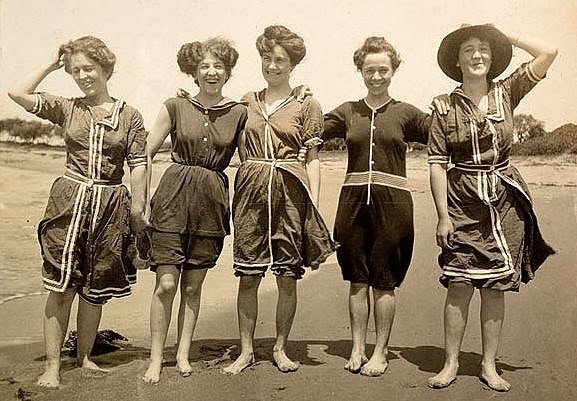
In Victorian times, swimsuits were less-revealing than most women's dresses are today. Today, swimsuits are more revealing than most women's underwear in Victorian times. Dress-like swimsuits didn't seen slutty or over-conservative in Victorian times, and neither do bikinis today. This is what I mean by social norms.

Here is the thing: modesty isn't a function of the quantity of skin you show, or the tightness of the clothes you wear; it is defined by how much your outfit makes men (or people in general) think that sex with you is imminent. The more you incite in men the thought that they can bang you easily, the less modest your outfit is. This is why short dresses are so much more sexual than pants. Men see you in a short dress and part of their subconscious recognizes that your vagina is essentially exposed (i.e. from the bottom). Sex seems much more accessible and immediate because there is only one thin layer of clothing covering the most sexually intimate part of your body.

But the threshold for triggering a man's thoughts of sexual proximity - the criterion for immodesty - is entirely relative to social norms and context. The man on the beach doesn't think sex is imminent when he sees you wearing a bikini, because every woman on the beach is wearing in a bikini, and he knows it is for swimming or sunbathing. But in 1910, if a man saw a woman on the beach in a bikini, he'd be sure that she was a woman of loose morals - and he'd probably be right.

Anyway, the point here is that wearing tight jeans in everyday American life is about as shocking as wearing a bikini on the beach in 2014. And wearing loose jeans in everyday American life is far more similar than you think to wearing a Victorian bathing costume to a Las Vegas pool party. Perhaps more importantly, when you use your clothes rather than your behavior to be modest, you are far more similar than you think to the girls who use their clothes rather than their behavior to get sexual attention. Don't be so sure that you are more intelligent just because you made the mistake about modesty rather than sexuality.

Is there an opposite extreme, where tight jeans start to look like a bikini on a Victorian-era beach (i.e. slutty)? Yeah, probably, but that's not the point - there are always excesses on both extremes. Today I happen to be calling out the conservatives.

So remember: wearing loose jeans doesn't avoid the wrong kind of attention; it just makes you look terrible.


Related Posts
1. "The Wrong Kind of Attention"
2. How to Get "The Right Kind of Attention"
3. Don't Wear Sneakers
4. The Most Important Time to Dress Well

Wednesday, August 28, 2013

If a Man Talks to You, He Likes You

I have made this point before, but only briefly; and as simple as the point is, it warrants further explanation.

If a man goes out of his way to interact with you, he is interested in you romantically or sexually - at least to some degree. A lot of women don’t realize this, because when they approach a man (for example, to ask directions in the street), they don’t do so with romantic or sexual intention. They wrongly project their own lack of intention onto the men who approach them. They think “When I approach a man, I don’t have romantic or sexual motives; so this guy asking me for directions has no ulterior motives.” But they are wrong.

If you are skeptical about this, consider that the same phenomenon is manifested in men. Men always “get the wrong idea” when a woman responds to their texts, or engages them in conversation in a bar, or doesn't spit on them and walk off when they ask her for directions. The truth may be that the girl is just being polite, or that she genuinely believes the guy just needs directions, but the man projects his own intentions onto her. He thinks “When I talk to a woman even for casual reasons, it is because I like her. This woman is talking to me, so she must like me.”

Yes, of course, there are exceptions to this rule. Sometimes a guy genuinely needs directions, or really is just talking to you to kill time at the bus station. But the point is that these exceptions are far rarer than you think. In fact, the exceptions are so rare that you are better off always assuming that men who approach you are interested than you are questioning it each time. In the rare instances that a man isn't interested, you have nothing to lose by assuming that he is; and the increased confidence you’ll have knowing that he is into you will help you to be your best self in his presence, which will attract him further.


Related Posts

Tuesday, November 13, 2012

How to Reject a Guy at a Bar - Part 2

[Continued from How to Reject a Guy at a Bar - Part 1]

The worst rejections men endure are the ones that are surrounded by rudeness. Men know that not all women will like them; this is expected. If it weren't, approaching girls would be easy. It is only because we know there is the possibility of rejection that most men get nervous and find approaching girls difficult. Being rejected rudely adds insult to injury. So if you are worried about rejecting a guy but preserving his ego, your two goals should be politeness and sincerity.

Most men know long before you say it explicitly that you are rejecting them. We may not be as intuitive as women, but we know attraction when we see it, and we recognize its absence with equal certainty. Your lack of enthusiasm in responding, the inattention of your eyes, your closed body language - all of these things convey the subconscious (and sometimes conscious) message that you don't particularly want to be interacting with us.

So in most cases, men know what's about to happen. What matters is that you show him that you don't think he is worthless just because you don't want to spend your night talking to him. Giving this impression depends on the tone of your voice, your body language and your facial expressions; but it will primarily be conveyed through your smile and your eyes:

  • Smile - If a smile doesn't come naturally, try to remember the fact that a man with enough balls to approach you essentially just told you that he thought you were beautiful (even if he just wanted sex, he still thinks this). Let this thought simmer in your mind for a moment before making your move to leave him. It should be enough fuel for a smile of gratitude, if nothing else.
  • Eyes - With your eyes, do not try to look apologetic or sad. This would be insincere. Instead, make sure to make eye contact with him. You shouldn't hold his eye contact in a lingering way, which would signal your desire to talk to him again; but neither should you let it be fleeting. Look him in the eye when you tell him that you are leaving. This is a sign of respect, which is something you should have for any well-intentioned man who makes an effort to meet you. Again, remember that he overcame his nerves, or at least was a confident enough person not to have them, and you will feel respect for him; then the eye contact will come naturally.

It is important to note that you do not need an interruption from a friend in order to make an exit. When girls "cockblock" for their friends it is crass and rude (if your friend does this against your will, you should still be able to smile and make eye contact as she drags you away). You don't need this. Instead, you can simply take the next natural lull in a conversation and say "Well, I am going to go find/talk to/dance with my friends. It was nice talking with you. Have a good night." Then walk away.

Do not say "I need to..." Instead say "I am going to..." By telling him what you are going to do, you remove any hint of an excuse from your language: you are telling him what you've decided, not blaming it on something else. Again, this is part of being sincere. It is a little more abrupt, but if it is said politely, with eye contact and a smile, it is better than lying to him about why you "can't" talk to him anymore. It will also save you from his wishful thinking that you would have stayed if you could have - which might result in him showing up again later.

If you struggle with the "walk away" part, it is probably because you don't have the appropriate momentum for your exit. It might seem harsh to walk off suddenly after standing there for a while talking to him. This is easily overcome. As you sense that you want to leave, start to collect your things, or get your money out to pay for your drink, or get down or up from your seat, etc. Do these things without stopping the conversation. He will see this and therefore be primed for your exit, which in turn will make it less awkward for you. It will also help you commit to leaving so that you don't falter and give in if he tries to convince you to stay.

As for men who are extremely rude or inappropriate in their approach, or guys that grope you: just walk away. You owe them nothing, least of all respect.


Related Posts

Monday, November 12, 2012

How to Reject a Guy at a Bar - Part 1

I recently wrote a post about rejecting men, but a reader (in fact, the author of an interesting blog about women's fashion) recently asked a more specific question: "What is the best way to reject a guy at a bar, as to lessen the blow to his ego?"

Before I get into how to lessen the blow to his ego, consider the following:
  1. Recognize that you like being hit on. A lot of girls that say they don't want to be hit on, when what they actually mean is that (a) they don't like having to reject guys they aren't interested in, or (b) they don't want guys to expect them to dance or kiss or go home with them. The actual act of being hit itself on is a pure ego boost, and I've never met a woman who doesn't enjoy this part of it. By acknowledging this fact, you will be better-able to recognize when you are encouraging men's approaches for the sake of your own ego, as opposed to doing so out of genuine interest in him.
  2. Don't worry about his feelings too much. While everyone has an obligation to be polite, you definitely don't owe him your attraction, and you don't need to baby him. If he can't handle rejection, he needs to learn how to. Consider your rejection a test of his manliness, and try not to worry about his feelings too much.
  3. Stop the interaction early if you realize you aren't interested in him. The less time you spend talking to someone, the less surprising it is when you end the conversation. But if you are trapped in the conversation (in a group setting, for example), you can...
  4. Steer the conversation away from personal topics. Focus instead on talking about superficial things, like what is happening around you, how busy the bar is, the lighting, etc. When you don't like a guy, think of your conversation like a hole you find yourself in: the less depth there is, the easier it will be to get out. Steering a conversation involves withholding your feedback on the things you want to avoid discussing (you should actually stay silent or give one-word answers) and then picking out things from his comments that you want to talk about, and playing them up - or else introducing your own topics.
  5. If he bought your drink and you accepted, you do owe it to him to stay until your drink is finished, unless he is inappropriate in some severe way (touching you, for example). You don't need to stay until he finishes his, but don't slurp yours down either. A polite exit will sound like this: "Well I enjoyed talking with you, but I need to go find/talk to/dance with my friends now. Thank you for the drink. I hope you enjoy your night." It is important not to start or end these statements by thanking him for the drink, since this will place too much emphasis on the fact that he paid for it, which could make you sound like you are just fishing for free alcohol, and piss him off. But if you are polite and he is upset that you leave, that is his problem, not yours.
  6. If you are a nice person, you don't need to worry too much. That is to say, if you are actually concerned about how to reject a guy kindly, you are probably already doing it as kindly as you will be able to. Focus most of your efforts on #2.
So with that backdrop, here is the practical answer...


Related Posts

Wednesday, November 7, 2012

An Interesting Hair Experiment...

I want you to help me conduct an experiment.

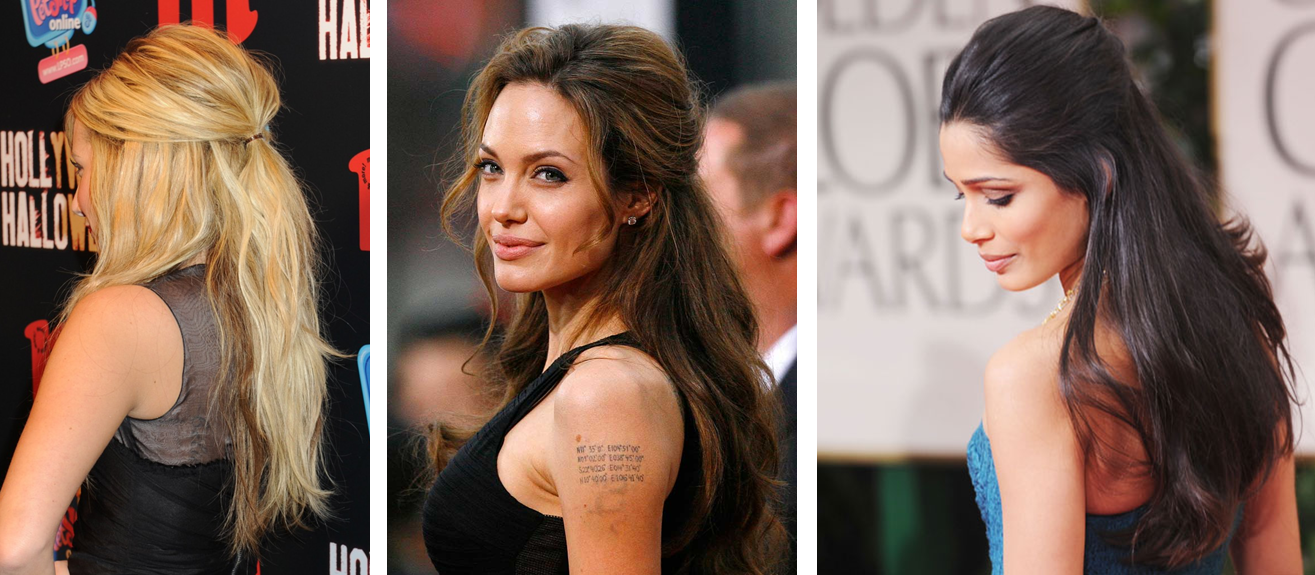
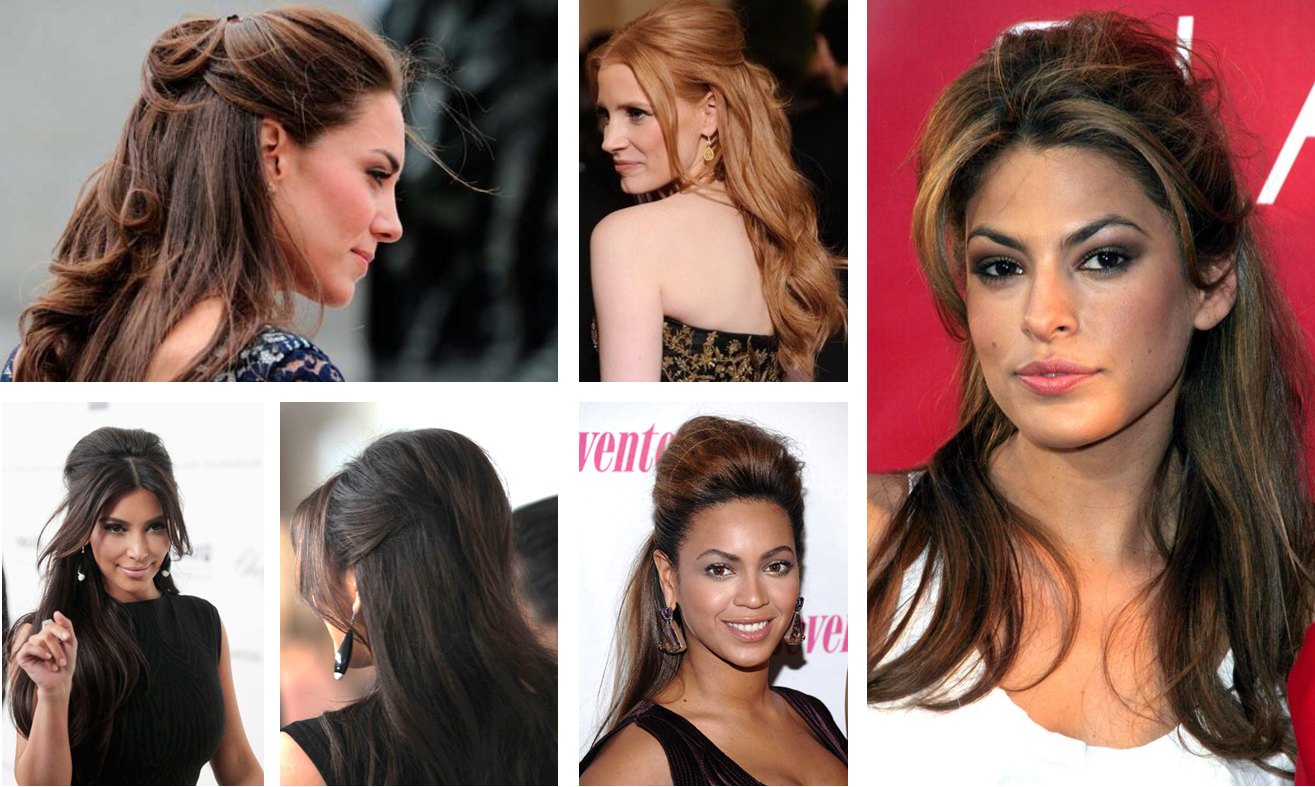
For a couple of years now I've realized just how much I am attracted to the hairstyle that most women call "half-up, half-down" or more simply, "half-up." Whatever it is called, I love it when girls wear their hair the way the women in these pictures are wearing it. It is extremely sexy and elegant at the same time, and immediately draws me to a woman. It is almost uncanny how much it affects my judgement of a woman's appearance. I find myself checking out bigger girls who are wearing their hair that way, or losing interest in (previously) attractive women once they change from that hairstyle to another, or else staring at a picture of a normal girl, not understanding why I am attracted, only to eventually realize that her hair is half-up.


I've thought a lot about why I like it so much, but nothing makes sense. I've never dated a girl who wore it that way often, or even had a crush on one who did. My mom or sisters never really wore their hair like that, my babysitters didn't, my teachers didn't - no one did. The only semi-believable reason I can think of is that some of the female Disney characters (who for most men my age were the first icons of female beauty) wore their hair like that, and maybe left an impression on me; though I don't remember being particularly attracted to one more than any of the others. It isn't an overly popular hairstyle in the United States. In fact, it is practically never worn in comparison to, say, Turkey and Italy or Lebanon (and probably other Mediterranean countries), where it is extremely popular.*

In any case, this has puzzled me enough that I've started asking my male friends what they think about this hairstyle; and I've been surprised to hear how much they agree that it is really attractive. In other words, maybe it isn't just my personal taste.


So here is what I would like you to do: the next time you go out, wear your hair in some variation of the "half-up" style depicted here, especially if it is not a style you usually wear. Go out like you normally would and pay attention to what happens. Then, in the comments of this post, report your findings. Let me know what comments you receive - positive or negative - and let me know if you had more or less (and better or worse) attention from men. You can also comment on the type of men if you notice a trend. Get your girlfriends to do the same on another night (so that you aren't all wearing the same hairstyle - awkward) and see how it works for them, or have them leave their own comments.

As motivation, here are some thoughts about how participating in this experiment could benefit you:
  1. You might discover a hairstyle that looks good on you.
  2. I've been told it is an "easy" hairstyle to make and wear.
  3. By taking a fashion risk, you will better understand what hairstyles look good on you.
  4. You will expand your comfort zone, and therefore your confidence.
  5. Because this hairstyle is not very popular in the countries that most of my readers are from, you will most likely stand out from other girls - in a good way.
  6. You will contribute to the pool of knowledge about what men like.
I'll look forward to seeing the results.

_______________________________
* The fact that all of these countries are more sexually polarized than the United States is another hint at what I suspect might be the reason why men find it so attractive.


Sunday, August 19, 2012

Are You Repressing Your Femininity?

In the same vein as the recent post I made about femininity, authenticity and compatibility, the following are excerpts from David Deida’s book Dear Lover (Chapter 9):
As a young woman, you may have dreamt of masculine saviors: horses, pop stars, white nights - any animal  or human, real or imaginary, that could take you somewhere new, somewhere magic. Deep in your heart you felt that someday a man would see your true beauty, your true light, your boundless ocean of love, and take you to the place you always wanted to be...
But at some point, you probably stopped trusting the yearning of your own feminine heart. You may have absorbed the anti-feminine attitude of your culture. Or possibly your family strongly emphasized masculine values.
For one reason or another, you probably became convinced that it is better - stronger - to navigate for yourself, to take yourself somewhere rather than trust to be taken by love.
Maybe your parents found your little sister more pretty than you, so you protected your crushed heart with a shell of masculine ambition. "My little sister may be pretty, but I'm going to be a scientist!" Perhaps you felt how your mother was restricted and belittled by your father, so you protected your vulnerable heart with a shell of masculine control: "Nobody is going to tell me what to do. I'm the sailor of my own ship!"
If you chose to be a scientist because you loved science, or chose to navigate your own life because that was your greatest bliss, then such decisions would be healthy and fulfilling. But if you chose to be a scientist because your parents ignored your radiance and your heart was crushed, or if you chose to guide your own life because you didn't want to be hurt like your mother was, then you have created shells built of fear rather than moved by the openness of love.
Beneath all your shells, your deep heart is always full of love's light. So, at heart, showing open as light and flowing open as love's offering is the most ecstatic and true way to live. But your acquired shells have their own voice: "Beauty is only skin deep." "My mind is more important than my body." "I can't trust men." "If I want a man's love I've got to make him want me." "My professional goals are more crucial to my life's happiness than who I go with or how much love I offer through my life and every breath."
These are all lies, and your deep feminine heart knows it. Yet, you are confused, because your shells can be so strong. You can come to believe the lies of your shells, and therefore, you can live an entire life betraying your deepest desire: to be recognized as light, adored and worshiped as love's radiance, offering yourself as a gift of love to be claimed by true divine masculine integrity...
Perhaps you try to trust a man and he eventually leaves you. Again you feel betrayed, so now, again from fear, you build yet another shell - "independent career woman" - that will protect you from being hurt or left in the cold by a man's untrustable commitment.
If you are like most women, you were born with a more feminine sexual essence...

If any of this caught your attention, you can get the book on Amazon.com.

I know a couple girls that have also gotten a lot from reading The Way of The Superior Man, which is also by David Deida. It is written for men, but touches on most of the same principles, just from a male rather than female perspective. Some people, myself included, prefer the more direct writing style in The Way of The Superior Man.

In any case, if this post is interesting to you, or if you are curious about the implications of sexual difference, I highly recommend both books.

Sunday, August 5, 2012

Femininity, Authenticity and Compatibility

I was on a second date last week, and towards the end of the evening the girl told me "You know what I like about you? You don't ask me what I want." I laughed because although I knew what she was trying to say, it sounded like "I like you because you ignore me." So she clarified: "No, I mean, like when it comes to where we are going or how we are getting there, you are decisive and know what you want. You always check to make sure your decision is OK with me, but you don't need my opinion to have your own. Other guys will constantly ask me what I want to do, even though I really don't care; and then it is just awkward because we go back and forth trying to 'let' each other decide - but I don't want to have to make the decisions."

This girl and I are compatible (in this sense, at least) because I am decisive and comfortable with being in control, while she is laid-back and likes to be taken care of. In this respect, I am very masculine and she is very feminine. We work together. If I didn't take charge and wasn't as decisive, or if she wanted more input than I offered her, we would have problems.

Years ago I used to think that women would like me if I bowed to their every wish. I would constantly fight my natural inclination to take charge in an effort to accommodate the girl's desires - which is probably exactly what my date's previous boyfriends and dates were doing. Like them, I would try to let her choose the time of the date or the restaurant, because I assumed that she cared. And this usually led to the kind of awkward back-and-forth she described. The reality was always that I knew exactly what I wanted to do for the date, but I was so wrapped up in wanting to please her, and so wrong about what she really wanted from me, that I repressed my urge to follow my masculine instinct to take charge.

I say all this in order to draw an analogy for women: in the same way that I didn't realize that women wanted me to let my masculine tendencies govern my interactions with them, many woman don't understand that men want women to let their feminine instincts guide their behavior. By feminine instincts I mean - among other things - a woman's desire to be taken care of, to be protected, to feel small, and to be desired or wanted (rather than self-sufficient). Men love these things about women because it gives us an opportunity to be in control, to protect, or to feel strong and self-sufficient - in other words, to exercise our masculine selves. By suppressing those instincts, you fight your nature and thereby inhibit your ability to attract, love and be loved by a man.

Many women either project their own desires onto men and assume that men want women to be (for example) decisive, powerful and goal-oriented, or else they believe these things because we are all told them by the undercurrents of feminism in modern American culture. However the seeds of the these ideas are planted, the result is the same: these women mask their authentic, feminine selves due to misinformation about what men want.

A simplistic understanding of the advice I offer on this blog would be "be more feminine and you will attract more men." Although this isn't a misunderstanding, it falls short of capturing the whole picture. Women are all feminine in varying degrees (just as men are masculine in varying degrees). Not every woman is the archetype of femininity, and it would be inauthentic for those who are less feminine to force themselves into the strictest "female" mold. However, it is just as inauthentic for a woman to suppress the natural feminine instincts that she does have.

So a better understanding of the advice I give on this blog would be "Allow your natural level of femininity to pervade your personality." If your experience is at all similar to mine, allowing your true sexuality to "drive you" will make you feel much more comfortable with yourself in your interactions with the opposite sex. The interactions will feel more easy and fluid, because you will be acting more in line with your natural instincts. Furthermore, you will start to attract men who are more naturally compatible with you. If you are less feminine, you will attract men that are naturally less masculine, and you will compliment each other better than if you tried dating an extremely masculine guy. Or if you are very feminine, you will stop attracting men who aren't masculine enough for you. You might find that you date fewer men (though I doubt this), but your dates will be more successful and "chemistry" will occur more frequently.

One word of caution: don't confuse "authenticity" with laziness or fear. Not wearing heels because you don't want sore feet shouldn't be excused by telling yourself you "aren't feminine enough" to wear them. Likewise, you shouldn't hide behind unflattering clothes by telling yourself you are a "tom-boy" or that they just attract "the wrong kind of attention," if the truth is that you are afraid to step outside of your comfort zone by wearing sexier, more feminine clothes.

Wednesday, November 16, 2011

Your Skin Color Matters

If you want to make yourself more attractive, you need to focus on three things when you are choosing your clothes: style, fit, and color. The need for a suitable style is obvious to most people - your clothes should reflect or magnify your personality. Simple enough. The need for the right fit should be obvious, but it is apparently less so to many women (and men). Too many people don't wear clothes that flatter their figure. However, color is the most misunderstood and neglected of the three, and it is arguably the most important.

In the same way that your clothes need to work with your shape and personality, they also need to compliment your color, or more specifically, your complexion, which is the combined appearance of your skin tone, eye color and hair color. Have you ever noticed how Latin and Mediterranean women almost always look amazing in red and black? or how middle eastern women look far better in the deeper shades of most colors (navies, olives, maroons, etc. as opposed to blues, greens and reds)? If so, you've noticed the effect of color working well with complexion. This effect has been studied, broken down, and rebuilt into a science for more than 100 years by students of fashion and cosmetology.

Here are a couple examples. Note how Courtney Cox and Katherine Heigl look better on the left, where they are shown wearing colors that work well with their complexion. The effect is subtle but it is strong.


If until now you've chosen colors based on something you saw a friend wear, or colors you "just like," there is a good chance you look bad in them. Men notice this, even if only subconsciously. If you haven't taken the time to learn what colors make you look best, you are throwing away potential attractiveness, and therefore undercutting your chances with men. I've observed in many instances that a woman is far more radiant and attractive due to her choice of a color that magnifies her natural beauty. The effect is significant.

I won't tell you how to choose your best colors, because there are other resources that can tell you far more than I. My main goal is to simply to convince you that color matters. But I can point you in the direction of a couple of those resources...

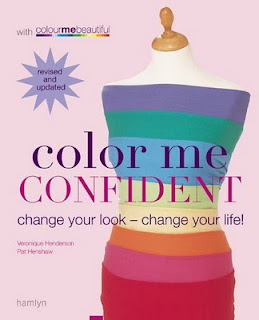
The best book I've found for women about color is called Color Me Confident. I bought a few different ones for men and women, and this one blew the others away (as did its counterpart for men). I like it because it uses modern celebrities as examples, does a good job of explaining the categories it uses to group complexions, and also has sections about the fit of clothes and makeup as well.

This book could reliably be your only resource. However, I have one other suggestion. Find a female celebrity that has your complexion (including eye color, which makes a lot more difference than you'd think) and spend some time looking at images of her on the internet, paying close attention to the colors she wears. Try the following: do an image search for her name and a color, and scan the results. Pay attention to how many instances there are of her in that color. Just as importantly, pay attention to what doesn't come up when you do these searches - i.e. the colors for which you cannot find many instances. Take Penelope Cruz for example. Click on each of the following image search links and notice how the results show whether or not the respective color (and what shade) works for her, based on the collection of images that appear in the search results:

Penelope Cruz Red 
Tons of instances of her wearing red, and she looks smoking hot in it (Latin women...)
Penelope Cruz Blue
Plenty of instances of her wearing blue, but notice how in most it is navy rather than a lighter shade
Penelope Cruz Orange
Basically just one orange dress, and notice how it is a burnt orange rather than bright

There are also a ton of websites out there that either describe how to choose colors that work for you, or else offer online (or in-person) consultations. There are some good videos on YouTube as well. While searching for some of the pictures above I bumped into a few good blogs, which have a lot of examples of color done well, as well as explanations of the theory. Take a look:
http://seasonalcoloranalysis.blogspot.com/
http://12blueprints.com/
http://www.prettyyourworld.com/

While it should only take an hour or so to learn the principles and figure out what are your best colors, it can take much longer to implement them in your wardrobe. It won't be easy to overcome some of your misconceptions. Someone may have told you once that pink was your color (for example), and you've worn it ever since, convinced by the confidence of their compliment that it made you look good. But their statement may very well have been wrong, in part or completely - even if you thought they knew what they were talking about when it came to fashion. Maybe they just wanted to make you feel good. Treat every color (or color combination) as suspect until you know it really does work on you. Be prepared to throw some of your clothes away.

I know these things because I paid no attention to my own color for years, and my appearance suffered because of it. Sometimes I would put on a shirt and recognize that it looked good on me, but I would never know why. Frankly, I never really wondered - I was just content that it did look good. And when I finally learned about the need to address my complexion and learn what looked best on me, I started to realize why those shirts had looked good. In fact, my memory of those instances eventually served as examples in figuring out which complexion I had and what would work well with it.

So if you aren't up to speed on your color, go buy the book, do some research online, and hit the mall. Men notice, and it will make a difference.

Thursday, October 27, 2011

Learn How To Be Social

Flirting and being personable will definitely and significantly increase your chances with guys. While you need to rely mainly on your appearance to get a guy to approach you, your personality shoulders a sizeable portion of the responsibility for keeping him interested once he has. It matters even more for establishing a relationship, and more still for maintainting a relationship.

However, before you can learn how to flirt and be personable, you need to learn how to be social. Unless you are social, your attempts at making the intricate adjustments needed to turn a typical conversation into a flirty one, or to show off your personality, will be drowned out by the difficulty of simply participating in the conversation. This difficulty is normally caused by self-consciousness, which in turn is caused by being unused to the situations in which it occurs. Luckily, there is a solution to this problem.

If you are shy, becoming outgoing (i.e. overcoming your self-consciousness in social situations) is not an easy task, and you need to approach it accordingly. You wouldn't train for a marathon by running a full 26 miles on your first day, so neither should you try to jump into a conversation with an attractive guy and assume that you will immediately be able to transfix his attention. Instead you need to break the task into smaller steps, just like you would when training for a marathon: at first you would just run until you were tired, in order to gage your stamina and decide how to lay out your training program. Then you would gradually increase your distance until you were strong enough to run the whole race.

You need to do something similar to overcome shyness. First, find out where your nerves start, that is, where your self-consciousness sets in. Some girls only get nervous when they are talking to really attractive guys, while others get nervous talking to any guy at all. Maybe you get nervous only when you talk to guys you've never met before - or maybe you get nervous even when you talk to girls you've never met before. Wherever your nerves start, that is where you need to make your first step towards becoming more social. And the key is to make that first step a small one, one you can manage.

So, for example, if you start to get self-conscious or shy about talking to strangers, make it a goal to talk to three strangers a day. If that is too daunting a task, step it back a notch and just make a point of merely saying hello to three strangers a day, or maybe just one a day. Once you get comfortable (and I won't pretend this will happen overnight) with interacting with strangers, move on to growing comfortable interacting with guys. Put yourself in situations where you will talk to guys you don't know, even if it is just while you are checking out at a store.

Continue to take small steps, each time setting your next goal by gaging and re-gaging your comfort zone as you become more and more social. Eventually, you will stop worrying about being in the interaction, and start worrying about how to change the tone of the interactions. This is when you can start thinking about learning how to flirt and be more personable.

Sunday, September 11, 2011

"The Wrong Kind of Attention"

I grew up surrounded by families that warned their daughters against wearing clothes that attracted “the wrong kind of attention.” When I was young I accepted this at face value, and understood (rightly) that these parents were trying to protect their daughters against men only interested in getting laid. It made sense to me (and still does) that the way a woman presented herself directly affected the way she was perceived - and most women didn't want just sex.

After I left home, I realized that this wasn't just a phrase used by the people around me; it was widespread. Even now, sometimes I will ask girls why they don't wear tighter clothes, or large earrings, or heels, and while they will usually make some excuse about comfort, they almost always follow it up with "and anyway, that would just attract the wrong kind of attention" - the same phrase, almost verbatim*. In any case, as I've progressed through my twenties and have gradually come to understand what it is that attracts me to a woman, I've come to realize that the notion of "the wrong kind of attention" is bullshit, for two reasons.

1. It assumes that a woman's clothing is responsible for others' perception of her sexual mores.

While there is a small grain of truth to this, it resides only in the most extreme cases (think: cheap hookers). The kind of women that would actually need to be reminded about attracting the wrong kind of attention are not the ones concerned with avoiding it. Conversely, the women actually getting warned about attracting purely sexual attention are almost always those who are in no danger of it. While this is sometimes because the girl wanting to avoid sexual attention has not been taught how to make herself sexually attractive to men, it is more frequently function of the fact that adornment and presentation are low on the list of factors indicating a girl's promiscuity. Her behavior is what matters, and girls that don't want casual sex don't usually act like whores. Here is a list of things that actually do attract the wrong kind of attention:
  1. Going to bars and clubs known for casual hookups
  2. Initiating contact with men
  3. Fucking on the first date
  4. Sleeping around (reputation)
  5. Drinking too much
  6. Swearing, being vulgar, etc.
  7. Dressing like a cheap hooker (Note: expensive hookers dress well and should be emulated)
Dressing sexy does not tell a man you are easy. It shows a man you are beautiful, and nothing more - except maybe that you are smart and understand what men - all men - like (see below). I have seen far too many women with great bodies wearing baggy jeans or tops that don't show off their good proportions. And I have seen enough women simultaneously exude both sex appeal and class, that I have unshakable confidence in the possibility of that combination. Make it your goal.

Think of female sex appeal as the equivalent of male confidence: while arrogance (the excess) is a turn off, a healthy dose of confidence is not only acceptable, but necessary. Men who err on the cocky side get a shot with way more genuinely good girls than the men who humble themselves and demur.

2. It ignores the fact that men looking for easy sex and men looking for something more than sex are both equally attracted by appearance.

Those warning young girls to dress conservatively ignore the fact that by doing so, a girl not only avoids attention from "bad" men, but simultaneously destroys her chances with "good" men. The good men value appearance just a much as bad men; they simply have requirements above and beyond it. If all good girls were to dress conservatively, good men might eventually lower their requirements for physical attractiveness and presentation (though this is doubtful - I would put my money on them giving up getting a good girl). But as I mentioned above, this is not the case; all good girls do not dress conservatively. There are plenty of women who are conservative in their behavior, yet still dress to maximize their physical attractiveness; and these are the women that will be getting all of the attention from the good men.

When I have daughters I will raise them to respect themselves and behave in such a way that their self-respect is evident to the men around them. I will have their mother teach them how to dress so that they look both sexy and classy, and then I will finish their instruction by telling them how to filter out men who are only interested in impregnating them and giving them STDs. I will not tell them to dress like their grandmother (or probably even their mother - fashions change quickly) because this will leave them without options, and probably make them social outcasts.


* This is interesting, because this kind of viral popularity is frequently a feature of phrases that carry more emotional or psychological value than any compelling rational content. The mantras of nationalists (“Strength Through Joy”) or the rallying cries of political parties come to mind (“Country First” or “The Change We Need”). I am not surprised that this bears the same symptom.


Related Posts
1. Sexy Versus Cute
2. How to Get "The Right Kind of Attention"
3. The Most Important Time to Dress Well
4. There Is Nothing Modest About Loose Jeans