Showing posts with label relationships. Show all posts

Tuesday, April 21, 2015

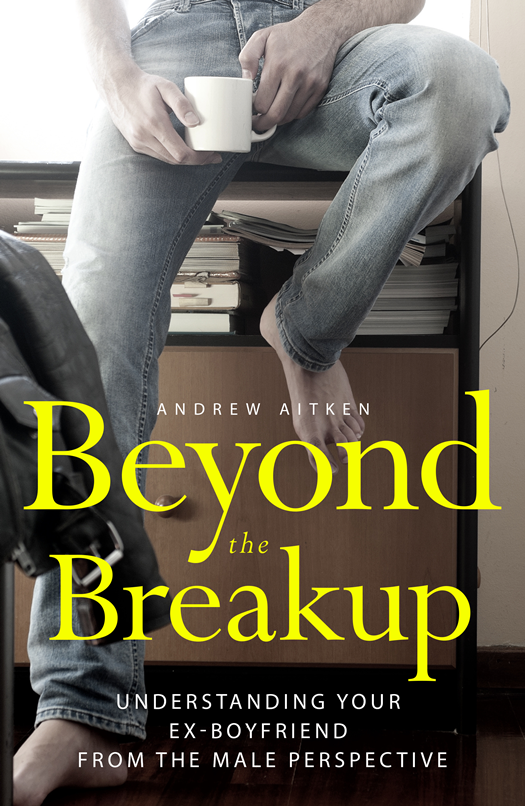
Book Release: Beyond the Breakup

After far longer than I ever expected it to take, my first book, Beyond the Breakup, is finally out. You can buy it in print format on the CreateSpace eStoreAmazon.com or any of the European Amazon sites. It is also available in electronic format on the Kindle Store (HTML format) or Google Play (PDF format).

As I've said previously (and I'm sure you can probably tell from the title and subtitle) the book is about understanding and handling breakups - specifically, the ones you didn't want to happen. For more detail about the content, I encourage you to take a look at the chapter list at the bottom of this post and read the book description just below the next paragraph.

As I've also pointed out previously, this book was originally intended to be a compilation of blog posts that I'd written about breakups and rejection; so if you are a frequent reader you'll definitely come across some familiar content. However, in the process of compiling the posts, I realized that a lot more needed to be said, and the book grew considerably. I'd estimate that the blog material counts for only 20% of the total content, so even readers who have read every post on this blog will find lots of new material - most of which I consider my best work to date.

Here is the description from the back of the cover:
"It might seem a bit backwards to write a relationship advice book that deals exclusively with breakups and rejection. It would be a lot more obvious to write a book that explains how to attract a man – or at least how to keep the one you already have. Better to give advice about how to start or maintain a relationship than how to deal with the end of one. 
"However, it has been my experience that, for most girls, a painful breakup or rejection actually is the beginning, not the end. It isn't the beginning of a relationship, obviously, but it is the beginning in the sense that it causes them to question for the first time their approach to dating, relationships, and the opposite sex in general. It is the beginning of their efforts to make a change. 
"This book is not written for women with a weak spirit. It isn't going to tell you how to mitigate the pain you feel in the wake of a breakup, and it isn't going to tell you that everything is going to be fine. And while it will tell you how to maximize your chances of getting your ex back, it isn't going to pretend that there are any 'tricks' to make that outcome likely. However, it will do something much more important: it will give you a strong insight into your ex's state of mind and male psychology in general. This will give you the foundation you need to navigate the breakup and – more importantly – propel yourself into honest and successful relationships with the men in your future." 
 – Andrew Aitken
Here are some of the book's stats:
Word Count: 56,000
Pages: 200
Print Format: Paperback
Print Size: 5.25 x 8 inches (13.3 x 20.3 cm)
Anyway, enjoy, and please let me know what you think, either in the comments here, the comments on Amazon, or by e-mail. As always, you can contact me at therulesrevisited@gmail.com.


Chapter List
Introduction
PART I – UNDERSTANDING WHAT HAPPENED
Men Don’t Fall in Love the Same Way Women Do
The Analogy between Sex and Commitment
Why This Always Happens to You
Changing Your Perspective
Why You Didn't See It Coming
Men Don’t Have “Commitment Problems”
The Difference between Liking You and Liking You Enough
Why Men “Fade Out”
You Weren't Dating Him in the First Place
The Small Things Didn't Matter Anyway
Why Your Ex (Who Dumped You) Is Still Contacting You
Your Ex and Guilt
Your Ex and Pride
Your Ex and Decisiveness
Interpreting His Emotions
What’s Going through His Mind 
PART II – HOW TO HANDLE THE BREAKUP 
The Importance of Silence after a Breakup
No, You Can't Be “Just Friends”
How to Know If You Should Cut Him Off
Why It's Never Too Late
Why You Should Tell Him That You Are Cutting Him Off
What to Say
Managing Your Expectations
When You Should Fight to Save Your Relationship
Exceptions to the Rule
How to Know If You Should Dump Him First
When He Cheats
The Anatomy of Missing Him 
PART III – FOLLOWING THROUGH WITH THE BREAKUP 
Making Him Jealous Doesn't Work
Seeing Him at Work
Keeping in Touch With His Friends and Family
Being Connected with Your Ex on Social Media
Returning His Things and Getting Yours Back
What to Do When He Contacts You
When He Says He Wants Another Chance
Reason and Distraction
Stop Sleeping with Your Ex to Prove He Likes You 
PART IV – MOVING ON AND REBUILDING
You Are Responsible for Your Own Romantic Happiness
Stop Letting Him Waste Your Time
Know Why You Want Him Back
Why Getting Him Back Won't Help
Why Getting Dumped Is a Good Thing
The Importance of Emotional Honesty
Dating Again
Putting the Breakup in Perspective
When You Can Contact Him Again
Reframing the Future 
A Final Word

Related Posts

Sunday, September 29, 2013

Why Men Are Capable of Commitment

I've pointed out some things about the male attitude towards relationships that - considered by themselves - might make women despair of the possibility of a real or lasting relationship (two posts that come to mind are Men and Sexual Variety and  Men Don't Have Commitment Problems). But they only represent part of the story... 

I remember a conversation that I had with an ex-girlfriend a few years ago about our fears in relationships. I told her that mine was to wake up one day, ten or twenty years into a marriage, and no longer want to be with my wife. Of course I'd only thought about the situation from the perspective of sexual attraction, and so had unsurprisingly developed the fear that I would grow bored or tired of her after she lost her beauty.

"Yeah, I see what you mean..." she agreed - but she continued, "I guess I've always just figured that the more time you spend with someone, the more you'll have invested in them. You'll have more shared experiences, more history - more memories. You'll know each other's habits, likes, dislikes, routines and quirks so much better than any new person's, that the temptation to leave won't really be that strong. You'd have to throw away everything and start again."

She was right. And I realized right then that my perspective on that hypothetical situation - and on relationships in general - was missing a huge piece of the puzzle. I was ignoring completely the phenomenon of attachment she described. I'd considered only lust and romantic love, the two early phases of relationships, and I'd lacked the experience or foresight to recognize that the situation I feared wasn't realistic.

More importantly, I realized that choosing someone to marry wasn't so much a matter of taking a gamble on the best girl possible as it was a choice of a girl to start to build a life with. In other words, the strength of the resulting relationship wasn't merely a function of the quality of the girl I would choose; much more important would be the life we'd live together - even if it wasn't perfect. By simply choosing to bind our lives together, we would be choosing to invest ourselves in each other; and before long, that investment would outweigh the greater sexual attraction of some hotter girl, or the excitement of sexual novelty.

Now, this isn't a particularly male phenomenon, but it is important for women to know that it isn't a particularly female phenomenon either. It happens to men too. So in the same way that I don't need to fear waking up twenty years from now and finding myself looking for a new wife, neither do you need to worry about your man doing it - assuming, of course, that you are both people of good-will, who are willing to work to maintain a good relationship. Even if he isn't aware of the phenomenon, it will affect him - just as it would have affected me even if I'd never had that conversation with my ex girlfriend.

The mistake I made in thinking about my future relationship is one that plagues young Americans' attitudes towards marriage. It is the reason that couples feel the need to live together before getting married, and stress out so much about choosing a partner. If these fears were rooted in reality, no relationship would succeed. There is always a hotter, richer or more-compatible partner out there; finding them isn't a prerequisite for a happy marriage, and you aren't going to renounce your vows just because you encounter them after marrying someone else. Your partner will always have the advantage of the time you've spent together and the relationship you've built.

It is also worth pointing out that this phenomenon is the main reason why you shouldn't linger in relationships that are stagnant or half-hearted. In doing so, you are investing yourself emotionally, and - despite the shortcomings of the relationship - that investment will make a break-up much more difficult.

In any case, I am writing this post because I was reminded of the whole concept a few hours ago, while listening to the lyrics of a new Dierks Bentley song, I Hold On, which is written to his wife. It's a great song, and one that I think is particularly poignant coming from a man:


If you can't watch the video, here are the words:
It's just an old beat up truck, some say that I should trade up
Now that I got some jangle in my pocket
But what they don’t understand is it's the miles that make a man
I wouldn’t trade that thing in for a rocket
What they don’t know is my dad and me, we drove her out to Tennessee
And she’s still here now he’s gone 
So I hold on... 
It's just an old beat up box, its rusty strings across the top
It probably don’t look like much to you
But these dents and scratches in the wood, yeah that’s what makes it sound so good
To me it's better than brand new
You see this here flat top guitar, has had my back in a million bars
Singing every country song 
So I hold on... 
To the things, I believe in
My faith, your love, our freedom
To the things I can count on
To keep me going strong
Yeah I hold on... I hold on... 
Like the stripes to the flag, like a boy to his dad
I cant change who I am, right or wrong
So I hold on... 
Yeah baby lookin' at you right now, there ain't never been no doubt
Without you I'd be nothing
So if you ever worry about... me walkin' out
Yeah let me tell you something...
I hold on...

Related Posts
1. The Downside of Cohabitation Before Marriage
2. We Have a Shared Responsibility
3. Why Rejection Is a Good Thing
4. The Male Sex Drive Always Recharges

Tuesday, June 18, 2013

Why Getting Him Back Won't Help

I need to give some advice that doesn't fall strictly into the category of "here is what you don't realize about men" (or what men like) - not because I want to change the theme of the blog, but because the misunderstanding it corrects is rampant in young relationships, and hopefully pointing it out will free some mental space in the minds of young women so they can instead focus more on their misconceptions about what men want, or other more-important things.

I have answered dozens if not hundreds of e-mails asking for advice about how to correct a relationship after a break-up or a break-up attempt. They usually sound something like this:
My boyfriend and I have been together for over three and a half years. About two weeks ago, he told me he was questioning the relationship and thinks he wants to break up. He told me that he dislikes X, Y and Z about the relationship and thinks they are signs that we'd both be better off with someone else.
We talked about it, and eventually he changed his mind, because we were both more open and honest with each other. We ended agreeing to give it another shot, and to do X, Y and Z differently. So we're still together.
I am glad we worked things out, but now I feel like he has all the powerIt's like I got "almost-dumped." I'm not completely happy with the situation but I am also unsure about how to proceed. What should I do??
In other situations, one person breaks up with the other, and then (by either party's initiative) the couple gets back together, thinking that "this time it will be better." In either case, the important characteristic is that the relationship reaches or nears its end, only to make what seems to be a thankful recovery.

The main problem in these situations normally isn't that one person can't follow through with the promise to change X, Y or Z (though this too is very frequently true, and a close secondary problem). The main problem, and what most people fail to recognize, is that when a relationship nears or reaches a failure point, its limits are defined.

Prior to such an episode, each party could believe - and usually at least hoped - that the relationship was strong enough to sustain limitless difficulties. Neither party knew how much it would take to break the other's feelings or commitment. But a break-up (or near-break-up) changes that irreversibly. Suddenly one partner knows that the other's commitment has real limits. What was once "a love that knew no bounds" and apparently bottomless, is shown to be of finite dept - maybe even shallow. So the disappointment comes, not because the relationship is broken, but because it is shown to be breakable.


There is an additional aspect of this phenomenon that makes it all the more condemning. While each partner previously compared their other dating options to something of unknown and conceivably infinite strength (i.e. their existing relationship), a doubt-forming episode will mean that they now compare their options to something they know to be finite, and perhaps even weak. Both the man and woman will convince themselves far more easily that things could be perfect with someone else, because their optimism about dating, stripped of its previous object, needs a new outlet. So in addition to seeming weaker in-and-of itself, the existing relationship will now be compared to inflated alternatives.


I have a very good guy friend who has been married for six years. His wife recently asked him for a divorce. He confided in me recently that this is actually the second time it's happened; two years into the marriage she did the same thing. At the time, he refused the divorce. He wanted to try to make it work, so they talked it through and she agreed. He essentially convinced her to "work on the relationship" and try to make the best of it.

Four years later, she's done the same thing, and this time, he isn't fighting it - because now he recognizes what I am saying here. Those four years, he admitted to me recently, were always spent in doubt of her feelings and fidelity, caused by the simple fact that she voiced her discontent. The relationship was ostensibly maintained, but the reality was that it had already been undermined by her attempt to end it; and my friend proceeded to waste four years trying to salvage what he essentially knew was dead after two.

Granted, there are some instances in which a break-up or fight doesn't reveal a relationship's depth, just as there are situations in which you might be willing to live with the limitations that such an episode often does reveal. The point here isn't to imply that all break-ups or fights are premonitions of ultimate failure, but to point out that if you find yourself disappointed in spite of having "saved" your relationship from a bad episode, it is almost certainly because that episode showed you that your relationship is more fragile than you'd hoped. So before you spend all kinds of emotional energy trying to get your boyfriend back or resisting a break-up, ask yourself whether just having him (or just having him back) is actually enough to satisfy you.

-------------------------------------
If you liked this post, you'll definitely like my book, Beyond the Breakup. In fact, this post has been included as one of the chapters, along with others that explain how to react when your ex tries to contact you, how to understand his motives for doing so, and much more.


Related Posts
1. Why Do You Want Him Back?
2. Why Rejection Is a Good Thing
3. Get Used to Rejection

Tuesday, April 9, 2013

Why Men "Fade Out"

Women sometimes complain about men "fading out" - that is, slowing and then ceasing contact after dating for a little while, or else just stopping it abruptly. The alternative, of course, is for the guy to call the girl and tell her directly (in these words or others) "I am not interested in seeing you again. I had fun with you but I can tell it won't work out so I don't want to continue dating."

No guy wants to make that call, so instead, many men simply stop communicating with the girl altogether. I understand that there are a lot of bad feelings mixed up in the experience of slowly realizing that the guy isn't interested, so I want to explain why men do this, try to excuse it slightly, and offer a way of handling it.*

The reasons men "fade out" are simple:
  1. It is easier than being direct with you (for him). He doesn't have to fumble through a difficult conversation in which he tries to balance the harsh truth about his feelings for you with an explanation that doesn't hurt your feelings too much. Not only is striking this balance difficult, but there are also implications if he fails to do so - damage to your ego if he is too blunt and ambiguity if he isn't sufficiently forthcoming.
  2. It is easier than being direct with you (for you). You don't want to hear the harsh truth any more than he wants to deliver it. True, you might want closure more than you want to avoid the pain of knowing he doesn't want to see you again; but the hit to the ego you receive when a guy fades out slowly is less severe than if he calls you up and says abruptly: "I don't think you are good enough for me" (which is what being dumped amounts to).
  3. It would be presumptuous to assume that you wanted to continue the relationship. This is the reason that I think women understand least. Sometimes a man feels like he doesn't have the right to announce his decision to stop seeing you, because he doesn't feel justified in making the implied assumption that you wanted to see him again. Sure, in some instances he might suspect that you do; but he never knows for sure. If there is enough ambiguity about your interest in him, it can very easily prevent him from being direct with you about his decision to stop seeing you.
  4. It still conveys the message. While in the short term you might be confused by his lack of contact, he knows that after a few months of silence there won't be any ambiguity about his lack of interest. In the long term, he isn't sacrificing clarity by forgoing the direct phone call.
Girls that have been faced with the need to dump a guy know exactly what I am talking about. In fact, this isn't a singularly male phenomenon, except in the sense that men - due to their promiscuity - tend to be the ones breaking things off more frequently than women.

So how do you handle the situation if a man starts to "fade out" on you? Well, I suggest you start by recognizing that your chief annoyance is the temporary ambiguity - with the emphasis on temporary (see #4 above). From there you have two options:
  1. Let the ambiguity dissipate by his continued lack of contact. This is usually difficult in proportion to how disappointed you are that he stopped wanting to see you; but a confident and vulnerable woman does not get very invested in the early stages of a relationship, and anyway is not interested perpetuating things with men who aren't interested (enough) in her.
  2. Remove the ambiguity by calling him. Whether you do it because you are impatient or because you are annoyed that he isn't being direct with you, you can always call him to ask for closure. While technically speaking this is initiating contact, it isn't problematic because you aren't trying to preserve the relationship anymore. I suggest saying something along the lines of "Hey, [name], I know things didn't work out between us, and I can live with that; but I just wanted to actually hear it from you and know what changed in your mind." You will be putting him on the spot here, so don't expect much in terms of an explanation, but at least you will get confirmation that he is no longer interested.
_____________________________

* Note that I am only talking here about "fading out" after early dating. If this happens after a long time together, or in an exclusive relationship, the reasons and obligations on the man's part are different entirely.


Related Posts

Tuesday, March 26, 2013

What Men Think About Your Disability

Hi Andrew,

I don't think I'm your target audience but found myself agreeing with many of your posts (mercifully they are short, to the point and well written).

When I am out and about I get a fair amount of attention from men and women. People smile often, say hello, compliment me on my hair, generally really nice to me. Well the women do. I even have complete strangers pouring their heart out to me. I notice men looking at me and once in awhile they smile. Without appearing 'full of myself' I know I have a nice, friendly, open face and personality. I do get very nervous if I'm aware a man might be interested in me. Consequently, all that easy breezy confidence I usually have disappears.

The thing is, I have weakness in my legs and I use a walker. I think this is an impediment (along with my age, although most people think I'm much younger than I am). I have had men approach me even though it's clear I need an aid. Mostly they do not. Most people really do notice my face first and then their eyes wonder down to notice my walker; they look back up then away.  My guess is that a lot of people are intrigued by the dissonance: a young looking, pretty woman using an "old lady" walker.

I appear very normal other than using a walker. I'm only interested in meeting a guy to date seriously. By the way, I'm 46.

I know my physical disability slashes my chances with most men but do you have any suggestions about how I may increase them?

Kind regards,
Nancy
__________________________________________

Nancy,

If I imagine myself in a public place where I was open to meeting women, and I saw an attractive woman with a walker, my reaction would be something like this:
"Woah, she is good looking. Is that a walker? That's kind of strange... but also interesting. It might be a little awkward trying to 'talk around' it [i.e. avoid bringing it up in conversation, or making sure to do so tactfully] but I still want to meet her. I wonder if it affects her ability to have sex? Would it be weird dating a girl like that? Would the walker be in the way all the time? I bet she is a good and interesting person." 
Then a series of images would flash through my mind about how the walker might play into a relationship with her. I might imagine helping her get seated at dinner, getting into and out of the car, etc.

This is not just a hypothetical situation for me. I had a similar experience one time, fairly recently, when I came across a cute girl's profile on a dating website. When I clicked-down into her photo album, I saw that she had deformed legs and a wheelchair. I remember thinking essentially the same things I've paraphrased above.

You can be 100 % sure that the sex question will go through any guy's mind if he is otherwise interested in you - whether it is for a temporary or long term relationship. In fact, I think it is safe to say that for any guy, this will be his biggest question, even if it seems obvious to you that there wouldn't be any issue. While it would be pretty awkward to convey your ability to have sex in a spoken conversation, you might consider internet dating, where you could literally add a note about it to your profile - maybe just a sentence at the bottom saying something like "By the way, even though I have a walker, I just want to put it out there that I am still capable of normal sexual relationship." This might seem a little awkward to post online, but it would be well received by the men, and it would remove an impediment - again, probably the largest - from their willingness to contact you.

If you date a guy and you get to a point where you would be comfortable having sex, I suggest letting him know indirectly that you are capable of it. You can do this by taking a natural opportunity in conversation to point out that your disability "doesn't prevent anything except your ability to walk." No need to wink, raise an eyebrow or even say it in a suggestive tone. Even if he doesn't understand that you are trying to convey your ability to have sex (in fact, it would be better that he didn't), that comment will be in the back of his mind when he thinks about having sex with you later, and it will have helped to form his understanding of the limited effect of your disability. He will therefore be more comfortable making a sexual advance. If he makes an advance before you are comfortable having sex, I suggest pointing out the reason why you aren't ready (maybe it's just too soon, or you are waiting for marriage, etc.), so that he knows that it isn't because of your disability. I do not suggest making an advance yourself.

The second biggest consideration will be the overall effect of the walker on day-to-day activities. I don't see this being a huge problem to an open-minded guy, but some men would prefer not to have to deal with it at all. The latter group of guys are probably not the kind you are interested in anyway, and I suggest just being happy that they won't waste your time. However, the ignorant and open-minded guys are the extremes on a scale. Different guys will consider your disability a "big deal" to different degrees, and it will play into each's decision accordingly. So with all guys, the best thing to do will be to help them become familiar with its minimal effect on your life as soon as possible. You can do this mostly by showing him how casual you are about it: if you go on a date, be nonchalant about your walker in any situations it creates. Mention the walker in passing without focusing too much on it, or casually telling a story in which it played a role, but moving on naturally in the conversation afterwards. Your casual references will speak volumes about the normal-ness of the walker in your life.

Humor will be a very big tool for you in this regard. In fact, I think it can be your biggest ally if it isn't too forced. For example, I envision you talking with a girlfriend and a guy you like, and you telling a story that happens to involve a funny situation that was caused by your walker. For a split second after the punch line, the guy is mildly uncomfortable (because he doesn't know how he "should" respond), but that awkwardness instantly melts away when he sees you and your friend talking casually and laughing about the whole thing. Then you return to normal conversation, just like after telling any funny story - except that he now realizes a bit better how natural it is for you, and how natural it would be for him if he were to date you. If you can show him that you can laugh about your walker and disability, he will be much more comfortable with the idea of dating you.

The converse is also true: nothing will turn off men more than to get the impression that your disability is a big deal, and is awkward, and is an impediment to a normal relationship. The girl I mentioned earlier with the wheelchair on the dating website made one huge mistake: she put a disclaimer at the bottom of her profile saying something like "and if you send me a message asking about my chair I will find where you live and beat you up." Obviously her threat was a joke (she was tiny), but it showed that she was uncomfortable with any attention drawn to the fact that she was different. She thought her wheelchair was a much bigger deal than it really was, and that was a red flag to me and other men that we would constantly have to tip-toe around the subject. Ugh. I would have been so much more attracted if she'd had written "Oh, and if you think my wheelchair holds me down, just wait 'til I kick your ass on the basketball court! ;)"

The general idea, I think, is that your walker isn't a big deal and you just need to show potential boyfriends this. I can tell from your e-mail that you are very comfortable with its effect on your life. But realize that for the guy, it is a new thing with a lot of associated uncertainty. The sooner you can remove that uncertainty and replace it with normal-ness and humor, the more he will be able to envision himself living with it and you.

It is worth mentioning that your walker is certainly acting at least partially as a filter. If a man approaches you, you know he is interested in something more than sex. Therefore I think you can ignore any advice about gauging his interest or making him wait. This doesn't mean you should take the initiative yourself (asking him out or for his number, for example), because this will come across as needy; but it does mean that you can be more open to his advances than other girls. (If you aren't getting a lot of attention from men at the moment, this openness will probably come naturally, since you will be excited about the prospect of finding a guy.)

So maybe I can summarize by saying I suggest the following:

  • If possible, convey to him that you are capable of sexual relationship
  • Demonstrate immediately that your disability is not a big deal, and that you are comfortable with it
  • Recognize that a man approaching you has already been "filtered" so there is far less need to test him. Be open but not needy.

Oh, and about being nervous when a guy gives you attention: you can be sure that the guy is nervous about giving you attention, and most likely does not notice your nervousness - unless you show some painfully visible sign of it (shaking for example). The first time I hit on a girl at the grocery store I was nervous as hell. I'd passed her in the aisles a couple times and she'd made eye contact back at me, so I suspected she might be interested, but I was still nervous. I forced myself to approach her and she was clearly nervous too (fidgeting, awkward, etc.). All this did was to calm my own nerves, which in turn calmed hers, and we had a nice conversation.

I hope some of this helps. Good luck and thanks for the kind words about the blog.

Andrew
__________________________________________

Hello Andrew,

Thank you so much for your thoughtful and practical advice. It is very helpful. I can't tell you how much I appreciate it.

You have helped me realize that I had made the walker more of an issue than needed. I suppose I lacked faith that any man would look past my disability. I'm glad you pointed out that I need not play hard to get with a man who has shown interest. It is a reminder that we really need to assess our unique positions when reading material on dating.

My confidence has gone up a notch. Now, all I need to do is get out there.

You really ought to write a book if you haven't already.

Once again; thank you.

Kind regards,

Nancy
_________________________________________

Andrew,

I was thinking if and when the time comes, do I need to be completely honest about how far my disability has affected my life? For instance, I am in continual pain but I have learnt how to manage it. Or do you think it would be better if I don't make an issue of it?

Nancy
__________________________________________

Nancy,

I would focus more on making sure he knows that you are used to it than trying to point out how bad it is. Just telling him how much it hurts isn't the whole story, because, as you say, you have learned how to manage it.

Recently my coworker and his wife bought a new house. They got a great deal on it, but realized only after they moved in that it was under the flight path of a local airport.

When they first moved in, they started hearing the planes, and were worried that they'd made a huge mistake. But after a couple weeks they literally couldn't even tell you when an airplane had passed because they were so used to it. If the real estate agent had shown them the home during heavier airplane traffic, or called their attention to it, they'd probably have immediately walked away, not realizing how minor a disturbance it would actually be. They would have missed out on a great deal.

Likewise, if it comes up in conversation for some reason, I would be honest and admit that yes, it hurts - sometimes a lot - but emphasize that you know how to manage it and it isn't a big deal because of that. I wouldn't even go into detail about how you manage it, because that calls more attention to it than it warrants. The point is that you do manage it, and it isn't a huge thing. End of story.

Hope that helps,

Andrew


Related Posts
1. You Are Responsible for Your Own Romantic Happiness
2. Self-Improvement Takes Time
3. Why You Don't Get Approached by Men
Sunday, March 10, 2013

Men Don't Fall in Love the Same Way Women Do

A reader recently asked me if I've learned anything new about women from writing this blog. I have. To be specific, I've learned one thing - one important thing. I want to explain that one thing here, because the corresponding lesson for women is equally important.

So many of the women that write to me for advice have stories that go something like this...
I met my boyfriend through mutual friends. I wasn't very attracted to him at first. He wasn't the best looking guy in the world and he was a little quiet. I never really considered him a potential boyfriend, but then he asked me out. I agreed because I wanted to give it a chance, and I hadn't been on a date in a while.
The first date went OK, so we kept seeing each other. Before long I started getting attached and soon I found myself falling for him. We spent a lot of time together, and by three months I was in love. Now we are five months into the relationship and things have stagnated a little. He seems to be losing interest. Our phone calls are getting shorter, we see each other less frequently, and he's been answering my texts sporadically. In general the excitement he showed at the outset seems to have faded. I don't know what to do... I am completely in love with him and don't know if I can handle a break up. Is there any way I can re-spark his interest? What can I do??
Obviously this is just a paraphrase; the details of each story vary. But the common thread among them, and the thing that I found so interesting, was that the woman's love grew gradually, over months, often starting as complete indifference. It amazed me that a woman could end up being so in love with a man that, initially, she wouldn't have seriously considered dating.

In fact, I was so surprised by this that I initially doubted the truth of the stories. I speculated that the women writing to me were subject to some kind of wishful thinking or tunnel-vision, by which they focused only on the good in their boyfriend rather than the advantages of other men. But this really couldn't explain the phenomenon. A woman couldn't wishfully think herself into a degree of love so strong that she would feel compelled to write me for help. I eventually realized that these women were being genuine, and I was forced to admit that there was a uniquely feminine mechanism at work.

By now most of you have probably recognized the important point for women, which is implicit in my astonishment: men do not fall in love gradually, and they do not find themselves suddenly falling for women in whom they weren't initially interested. I was surprised because I had wrongly assumed that women work the same way as men in this respect. But this is not the case.

Now, let me qualify a couple things before going any further. By "love" I mean deep romantic attraction, as opposed to lust or long-term attachment. Lust is primary, physical and fleeting for both sexes, and long-term attachment takes years of shared experience to develop in either sex. Also, I am not saying that this is the only way women fall in love, or the most common. I recognize that women can experience something closer to "love at first sight."

The important thing to recognize is that you cannot expect (much less make) a man gradually fall in love with you in the same way that you might fall in love with a man. It doesn't work that way for us. Male romantic love is something that either starts early and continues, or else doesn't start at all.

Since recognizing this difference in the sexes, I've had time to consider why it exists, and I think I have a reasonable understanding of what is going on. The information that a man needs to trigger romantic love is information that he can perceive within a few interactions with a woman. I believe this is true for a couple reasons:
  1. A great deal of his attraction to a woman is physical, and her approximate physical beauty can be demonstrated by seeing her in a handful of outfits (or, to some degree, through photos).
  2. A great deal of his attraction to a woman is rooted in her personality and energy, which can be demonstrated by experiencing her in a handful of moods. This takes longer than the physical attraction, but is still possible within a fairly limited number of encounters.
Other data, such as a woman's religious or political beliefs, her social class, her family, etc. are either immediately available to a man via conversation, or else far less significant in garnering his attraction. So, in general, a man can evaluate a woman quite quickly.

Now, for women, the situation is different. Many of a woman's triggers for romantic love are less immediate:
  • His personal strength and emotional stability, which can only be demonstrated by seeing him react to challenging situations, and these are unlikely to arise on a daily basis.
  • His intelligence and confidence, which - although more readily assessed - can also take time to evaluate, as they are best demonstrated via situations in which his wit or knowledge is pitted against others', or by seeing how he responds to other men in a variety of real-life social situations.
  • His commitment, which is only demonstrated in proportion to its duration. The longer he is with you, the longer he is likely to stay with you.
In other words, while a man judges his woman primarily in relation to himself, which he does quite quickly, a woman evaluates her man on how he relates to the outside world, and this takes longer. In addition, and perhaps more importantly, a woman needs to gauge her man's reliability, and this demands time.

From an evolutionary biology standpoint, this makes good sense: the man who propagates his genes successfully does not need months to judge the reproductive potential of his mate, or her ability to nurture and raise children; he can see these things from physical cues, as well has her energy, moods, and her instinct to take care of him. But the woman who propagates her genes is one who accurately judges whether the man with whom she mates is not only strong, but also stable - that is, capable of protecting and providing for her children until they are grown.

The implications of this are enormous for both sexes in dating, but let me underline the biggest lesson for women: if a man isn't falling for you from an early stage - say, the first month - it isn't going to happen. Don't wait around for his feelings to "grow" the way yours sometimes do. They will not. While this doesn't necessarily mean that he should be ruled out as a potential boyfriend or husband, it does mean that he will never be the woozy, infatuated lover you've seen in the movies. And if this is something you can't live without, you'd do better to break up with him now than to become more emotionally or sexually invested before breaking up with him later.

-------------------------------------
If you liked this post, you'll definitely like my book, Beyond the Breakup, which explains everything you need to know about dealing with you ex: what he's thinking, what is motivating him to stay friends with you, how to maximize your chances of getting him back - and if that doesn't happen, how to focus on your future.


Related Posts
1. Why Women Don't Know What Men Want
2. The Female's Internal Conflict
3. The Analogy Between Confidence and Beauty
4. The Analogy Between Sex and Commitment

Friday, February 15, 2013

The Advantage of Dating After 30

Two women step out of their front doors on a Friday night in New York City. It is the middle of winter and a light snow is just starting to fall. Both women are dressed up and heading out to meet with their respective friends for some drinks. One woman is 23 years old and the other is 32. Both are single and want little more than to ultimately find true love.

The 23-year-old has had one serious boyfriend in her life. She slept with him during all of the 3 years they dated, until he broke up with her soon after they graduated from college. She recently had an exciting night of sex with a guy she met in a bar who was incredibly attractive. He had seemed interested in her - he was even affectionate in bed; but now he isn't calling. In the back of her mind she knows there will be attractive men out tonight, and she is hoping to eventually meet someone she can date seriously. However, she hasn't thought too much beyond the evening and maybe the start of a relationship. Right now, the excitement and nervousness of going to a high-end nightclub for the first time occupies her mind, as she grew up and went to college in the rural South where all they had were a few dive bars.

The 32-year-old has had five "official" boyfriends in her life. She's slept with eight men - four were her boyfriends and two were guys she was "just dating." They seemed interested but faded away after sex. The other two were drunken one-night stands during college, before she knew better - or more accurately, when she learned better. She is growing more and more self-conscious and concerned about the fact that she is still single in her thirties. While she knows she was probably too immature to get married previously, she also knows that her friends and extended family have started raising eyebrows. However, in the past two years she's really started to see trends and mistakes in her dating history, and she encountered a few ideas in books and online, and these have really changed her outlook. She knows now what she did wrong before. While she knows Manhattan is a horrible place for a single girl to live, she hasn't lost hope yet.

As the 23-year-old gets out of her cab in front of the nightclub where she'll meet her friends, the sharp cold bites at her face. It excites her because she only recently moved north, and this is the first time she's gone out to party in the snow. Stepping out onto the busy Manhattan sidewalk wearing high heels and her her new coat, she feels like she is on the set of Sex and The City, or one of her favorite romantic comedies. If she is honest with herself, she sort of expects to meet a guy in New York, though she definitely isn't ready to get married. She has a career and other aspirations to meet before she is ready to settle down.

As the 32-year-old gets out of the cab in front of the lounge where she'll meet her friends, the sharp cold bites at her face. It reminds her of the time three years ago when she first met her ex boyfriend. It was snowing then, too. She'd seen him looking at her earlier across the bar she was at with her friends, but he didn't approach. Then, by fate (she knows now it was just coincidence), they had both walked out of a bar at the same time (closing time). She'd been a little tipsy and given in when her girlfriends pressured her to go ask him for his number. It had felt a bit strange to do it, but in the end they dated for eight months, so for a while she thought it was the right move - at least until he dumped her for a girl who he said was more "his type."

The 23-year-old meets her girlfriends, who are waiting in a big crowd at the velvet rope outside the nightclub. The single question that consumes her mind is whether or not she is hot enough to be let inside. She starts to feel nervous. She knows she is hot, but the other girls waiting to get in look like supermodels. But as the bouncer lifts the rope and chooses her and her friends before all the others, her excitement and ego both skyrocket. "I love nightclubs already" she thinks to herself, as she looks over her shoulder and sees the other girls outside in the cold, watching with jealously as she walks through the door. She feels sorry for the few girls who were clearly older than the others - probably over 30; they definitely aren't getting in.

The 32-year-old meets her two girlfriends at an upscale lounge that they've come to like, mostly because it is never too loud and has a good layout, conducive to meeting new people. It doesn't hurt that the men who go there are generally older professionals, men who have their shit together and don't drink until they fall down. They pick a good spot at the bar and order a drink. They've arrived early so the crowd is still a bit sparse, but this gives them time to actually hang out and talk before anyone else arrives and they get involved in other conversations. As the 32-year-old orders her drink, she chats with the bartender for a bit, because she knows that even a brief conversation with a stranger (male or female) will get her into a more social mood, which might help later if any men want to talk to her. She learned that trick when she first moved to the city and sometimes went out alone. In fact, she'd met one of the girls she was with tonight that way.

The 23-year-old is amazed by the decor and energy inside the club - she's never seen anything like it. She feels like a celebrity, surrounded by the dancers, the music, the lights, the men - the men! Through the heavy club atmosphere she sees them and wonders who these guys are... standing on couches, dancing with beautiful women and drinking expensive champagne by the bottle. Some of them look like they might be famous but she isn't sure. Almost all of the men are drunk already. A guy standing next to her, who looks a bit out-of-place in his simplicity (though he is fairly attractive), raises his voice to ask her what she thinks about the DJ tonight, adding that he would prefer more popular music, but overall he was quite good. "He is good" she says without making eye contact, but she turns away immediately. "What a stupid question," she thinks to herself (though if she is honest, she also admits that she didn't really know what to say in response). She wonders how she can get an invite to drink at one of the tables...

The 32-year-old returns to her friends after her conversation with the bartender to find that a tall, very stylish and attractive man was asking her friends if they could introduce him to her. Her friends oblige, and he immediately isolates her from the group. This screams "predator" to her, but she knows that not all men have great game, so she doesn't bail yet. They talk for a few minutes, but the 32-year-old is further turned off by his constant smirk and the way he keeps touching her arm. She's met men like this before - in fact, one of her ex boyfriends approached her with the same cocky, sexual demeanor. They dated for about a year, but that transparent facade of pseudo-confidence remained throughout the relationship. She eventually dumped him and now considers the whole year wasted - at least from a dating perspective. When the arm-touching becomes a little too much to handle, she tells him it was nice to meet him and politely excuses herself to use the restroom.

The 23-year old and her friends are approached by a bouncer who invites them to drink with "some gentlemen at the VIP table." They gladly agree, and follow the bouncer as he ushers them through the crowd like celebrities. The "gentlemen" welcome them with free shots of a vodka, which looks like it is top-shelf (she gets a glimpse of the label; it is called Stolichayna or Stolishnaya - something like that. It looks so exotic - Russian, she thinks.) The 23-year-old takes a liking to the only guy at the table dressed in a suit; he is very good-looking and seems to be the leader, even though she guesses he is only 24 or 25. She is sure that she can have him because she knows she is hotter than her friends. By now she is getting fairly drunk and they start to dance. After several minutes his hands are holding her waist (she loves that feeling) and they kiss. He sits down with her to "take a break from dancing" and they start to make out on the couch. The music and alcohol drown out everything else and she is lost in the moment...

The 32-year-old returns from the bathroom. Her two friends are now talking to a group of three guys, one of whom is listening more than participating. She can tell from his posture that is isn't shy or socially awkward - but rather patient. This interests her. She intentionally positions herself  right next to him as she re-joins the group. He introduces himself and they start to make small talk. She wouldn't have picked him out from the crowd for his looks, but his understated and confident demeanor is confirmed and grows on her as they talk. A couple times he mentions things in passing that really spike her interest. She would stop him and ask him to elaborate but she is also interested in what he is telling her at the moment. He is clearly experienced and intelligent, and she judges that he is probably at least in his mid-thirties. Although he is older, she's learned over time that this is better than the opposite. At one point it crosses her mind how glad she is to be in a venue where she can hear him clearly. Conversations like this were always impossible in the nightclubs she used to go to in her twenties. Their conversational chemistry is great, and they continue talking for almost two hours...

The 23-year-old is hammered by the time the lights come on at closing time, and she considers herself the luckiest girl in the club because of the guy she "picked up." He invites her back to his hotel room to "keep the party going." Despite her drunkenness, she hesitates. She knows she doesn't want to sleep with him - she remembers how that turned out last time. But she agrees to go anyway, reasoning to herself that she can always tell him no later. As he takes her hand and leads her out of the club and into a taxi, she catches a glimpse of the out-of-place guy who'd asked her about the DJ at the beginning of the night. He has a strangely smug look on his face as she trips into the cab with the guy in the suit. It occurs to her as they pull away in the taxi that the suited guy still hasn't asked for her name...

The 32-year-old is still talking to the quiet-but-confident guy when she realizes it is already a few minutes past midnight. Normally she leaves bars by 11 pm, but she really wasn't paying close attention to the time tonight. She tells him that she really needs to get home so that she can get up at a reasonable hour for her workout. He asks her for her name and then her phone number. She knows this drill; she'd been through it probably a hundred times before, but her gauge of personalities has gotten better and better over the years. She has a pretty good feeling about this guy, so she decides to give him her last name too. He suggests that they should meet up next week sometime for coffee. They say goodnight and go their separate ways. As she walks out the door, she catches a glimpse of the cocky, stylish guy that had approached her earlier. He had obviously been watching in confused surprise as she gave the less-attractive guy her number. "Filtered him out." she thought as she smiled to herself and slipped out the front door and into a passing cab. "Wouldn't have done that ten years ago..."


Related Posts

Monday, February 11, 2013

What Men Think About Valentine's Day

The average guy doesn't like Valentine's day. Aside from the obvious fact that the holiday is driven by marketing hype much more than by the honest needs of relationships, men dislike Valentine's day because it places pressure on them to express their feelings in unnatural and effeminate ways, and often to a degree they feel unprepared for.

On Valentines's day, men are expected to show their undying love for their woman by following a script prescribed by Hallmark or Flowers.com, and promoted by Hollywood: flowers, fine dining, exuberant cards, rose petals, teddy bears, etc. If a man doesn't follow this script, he suffers the consequence of disrupting the relationship. But if he does follow it, he feels like an emasculated pushover, forced by social pressures into expressing feelings that he may or may not have in ways that would never have occurred to him naturally. Either way, he loses.

Not every man understands his own distaste for the holiday. Maybe a man's aversion to Valentine's day is manifested as nothing other than a small feeling of annoyance in the back of his mind as he tries to pick the least-gay card off the shelf in CVS (from among thousands of cards designed for women, by women). But this annoyance is rooted in the fact that he feels forced into expressing himself in unmanly ways.

A man demonstrates his love for you regularly in ways that aren't as ostentatious as a large bouquet of roses, but run deeper for their lack of overt exhibition: he commits to you willingly, he suppresses his desire to be with other women, he avoids reminding you of that desire, he attends to your emotional needs without complaint, he holds you and protects you, etc.

In addition, men are skeptical of Valentine's day because they know it is (at least partially) motivated by a woman's need to demonstrate to her friends how much she is loved - sometimes more so than it is motivated by a true need for the visible symbols of that love. Again, while most men might not recognize this consciously, it is implicit in their thought that the Valentine's day traditions seem overdone and excessive - because they are excessive if all that drives them is the woman's need for visible expressions of love.

I am not saying that no man likes to express his love through a card or flowers, or that men don't enjoy romantic dates. Some probably do. And I am not saying that there is no need for visible signs of affection in relationships, because there is. They have a time and a place (especially if the man and woman both express their love through gifts). What I am saying is that when a man doesn't get to choose that time and place, and when his hand is forced by the social pressures of a vacuous holiday, his masculine decisiveness and authority are called into question, and he resents it.

So this year I suggest you do three things to help your man through the awkwardness of Valentine's Day:
  1. De-emphasize Valentine's Day by dismissing it openly to him as a marketing ploy. Say something like "Valentine's Day is such a farce; if there weren't decorations in the grocery store and commercials on TV, no one would even remember it after five years. It's purely driven by marketing." (Do not tell him not to get you anything, as this might give him the idea that you don't like receiving gifts.)
  2. Get him something small. The biggest pressure on Valentine's Day comes from the "culture" within the relationship to make a big deal out of it. By only getting him something small (like a card or dressing up in lingerie), you take a lot of the pressure off him the next year.
  3. Curb whatever desire you have to show off on Valentine's Day. Aside from fact that your single female coworkers will probably murder you when you receive roses and a huge teddy bear at the office, recognize that a truly confident woman who is secure in her relationship doesn't need the external affirmation of her peers' jealousy.
  4. Recognize the existing expressions of his love for you, as described above. This will help you to realize that you don't need chocolates on some arbitrary day in February. (If there aren't any common expressions of love in your relationship, you probably shouldn't be together.)
Before you complain that taking the pressure off a man on Valentine's Day makes it "too easy for him," consider this: by stepping back and letting a man do that to which he is naturally inclined, you adopt the same attitude that you do when you don't initiate contact with a man, or when you cut off a guy that breaks up with you: you are stepping back and accepting what happens, even if it isn't what you expected and hoped for. Just like you gain nothing by artificially perpetuating a relationship by constantly contacting a guy who doesn't like you very enough, so too do you discern a man's true feelings for you by taking off the pressure and letting his actions on Valentine's Day (or at other times) reflect his true feelings for you. Don't deceive yourself by reveling in a forced sign of his affection.

If your man refuses to celebrate Valentine's Day, but you don't agree with him that it is ridiculous, your best bet is to employ the tactics of the author's wife in this post:
http://masculine-style.com/you-know-shes-a-keeper-when/


Related Posts
1. What Men Think About Being Called "Cute"
2. Never Tell a Guy When You'll Have Sex With Him
3. Who Is This Girl?
4. The Analogy Between Confidence and Beauty

Friday, February 8, 2013

The Analogy Between Sex and Commitment

A recent post on Hooking Up Smart really grabbed my attention. The first item in the post 7 Reasons Why Women Reject Eager Men reads:

Women understand the male role as the gatekeeper of commitment, just as we [women] are the gatekeepers of sex. In the same way that a man may question the long-term potential of a woman who grabs his junk on the first date, women are wary of men who are “emotionally promiscuous.”

This idea is huge, and it has been on my mind since I read that post. I've practically been able to feel the gears in my head turning as I've considered the various implications, and recalled instance upon instance in which I've seen it demonstrated. It's been eye-opening just thinking about it. I thought I would share some of the ways I've recognized the concept at work in typical inter-sex dynamics:

  • Men are always trying (and failing) to elicit sex from women; women are always trying (and failing) to elicit commitment from men.
  • A man doesn't owe a woman his commitment any more than a woman owes a man her body.
  • Women complain about men being "afraid of commitment" when the men refuse to date them seriously, in the same way that men complain about women being "prudes" or "bitches" because they won't go home with them.
  • Ideally, in a long term relationship, a man freely gives his loyalty to his woman, and a woman freely gives her body to her man.
  • This blog and books like The Rules or Why Men Love Bitches - which all essentially try to help women attract and get commitment from men - are the perfect analogues to the thousands of blogs and books teaching men how to get laid.
  • Men and women are both disappointed by the opposite sex equally: women get dumped (or not called back) by men just as often as men go home from the bar or club empty-handed.
  • Men don't respect women who have sex too soon; women don't respect men who say "I love you" too soon.
  • While neither of these are something either sex looks for in the other, a man is unsurprised if a girl has given herself to many men emotionally in the past (i.e. committed to them), just like a woman is unsurprised if a man has fucked a lot of girls (i.e. given himself to them sexually).
  • Men like that a woman can easily attach to a man emotionally, just like women like that a man can easily attract women sexually.
  • Men get frustrated at women who deny them sex after dating for a long time in the same way that women get frustrated with a guy who won't say "I love you" after dating for a long time.
  • A man feels bad when his woman says "I love you" before he is ready to reciprocate the expression, in the same way that a woman feels bad telling a guy she isn't ready to sleep with him when he tries to have sex with her. 
  • Some women feel drawn towards a man when they learn that he has never been in love before, while some men have fantasies about taking a woman's virginity.
  • Women love to discuss relationships and each others' involvement in them (who has commitment from whom) with the same enthusiasm men have for discussing their sexual escapades.
  • Men usually escalate a relationship physically (towards sex) whereas women usually escalate a relationship emotionally (towards commitment).
  • Women take pride in being able to get a guy to want and commit to her (even if she isn't that into him) in the same way that men take pride in getting a girl to let him have sex with her (even if he isn't that into her).


Related Posts

Sunday, January 13, 2013

What Men Think About Your Intelligence

A reader recently commented on the post Men Don't Care About Your Accomplishments.
I am a highly intelligent woman, though not a genius by any means. However, men my age tell me that intelligence is not a turn-on for them. They say that as long as a woman is "reasonably intelligent" that is what they need... This makes me think that I might be possibly too cerebral to attract men... I laugh but I'm not bubbly and I never dumb myself down for men.
Someone rightly pointed out that part of what put men off was my desire to correct things they said that were inaccurate or participate in verbal sparring (I appreciate a good debate). I've reigned that in with good results but I want a man who actually likes my intelligence.
Is this a matter of men liking different things? Does my intelligence make no difference at all? Or is it a matter of combining my intelligence with enough social leverage to not make it my main feature?
This isn't the first time this question has shown up in the comments of this blog - or in my e-mail. I have also discussed the topic at length with my sisters, their friends, and a couple of the girls I've dated. And judging from their absolute disbelief at what I've told them, there is some news to be shared here...

No woman wants to date a weak man. In fact, a man's attractiveness to women hinges on her perception of his personal strength. A man could manifest his strength in many ways: he could be financially powerful (rich), physically powerful (tall or strong), socially powerful (confident), intellectually powerful (smart or witty), morally powerful (good), politically powerful (highly positioned), etc.; but unless you respect and admire him for his strength, however it is manifested, you will not be attracted to him. Even the best-looking man in the world will be rejected by women once they realize he is weak.

Men know that their role in a relationship is to be the more powerful one, and to use their power to protect and provide for their woman and children. If you subscribe to evolutionary biology's take on history, you will recognize this as a result of the fact that women have long been the physically weaker sex, and traditionally they have needed a male to protect and provide for them and their offspring. But reasons aside, the fact remains that men want to be the stronger mate in relationships. It gives us a feeling of importance to take care of our woman and children - it gives us purpose.

Women also prefer this state of affairs, as is evidenced by the fact that women routinely choose more powerful men as their partners. Women want a man who can hold his own among other men, who is impressive to them, and whom they admire for his strength.

Now, one of the most important signs of a man's power is his intelligence. It is the most pervasive expression of power because it touches every aspect of a man's life and facilitates all other expressions of power. For example, an heir to a large inheritance has financial power, but without the savvy to invest it wisely, that power will be squandered. A man might be physically strong, but unless he knows how to fight technically, he will be beaten soundly by much smaller, weaker opponents (the martial arts demonstrate this). Or a man might have all the social confidence in the world, but unless he is smart and discerning enough to know how and when to wield it, he will alienate those around him.

Intellectual strength is also instrumental in developing other strengths or powers. A man who is smart enough to understand the biological mechanisms behind dieting is going to be a much more effective in his workouts than the stereotypical dumb jock. He will see faster and better results, and will end up being physically stronger (all else being equal). Or a man who is sharp enough to observe and understand social dynamics will eventually gain more leverage over social situations than will a stupid but naturally confident person; his presence will become more commanding. Or again - more simply - smart men are more successful at their jobs and make more money than unintelligent ones.

One of the most common comments on the post Men Don't Care About Your Accomplishments, is the suggestion that men are are "threatened" or "intimidated" by smart, accomplished and intelligent women. When a woman is smarter than a man in a relationship, it isn't necessarily "intimidating" or "threatening," but it does rob him of a large portion of the power he feels that he needs in order to fulfill his role in the relationship - that is, in order to protect and provide for his woman and children. Note that it isn't his absolute power that is important here, but his power relative to hers. He needs to feel both powerful himself and needed by her in the relationship, both needs being intimately linked.

If this doesn't make sense, consider the same point by analogy: a man needs to feel admired and respected in a relationship in the same way that a woman needs to feel adored and desired. A woman's traditional role is to be the mother of the couple's children, and in order to fulfill that role she needs to be beautiful and radiant enough to attract her man - to make him want her sexually. A man who feels powerless in a relationship is like a woman who feels undesired in a relationship.

Alternatively, imagine how it would feel to date a man who was far more physically attractive than you. I don't mean more attractive "for a man;" I mean more attractive absolutely. Imagine he is tall, incredibly handsome, has the perfect physique and dresses impeccably. You, on the other hand, are slightly out of shape, have aged faster, aren't the best looking woman in the world, don't really do the whole "make up thing" well, and can never seem to pull off "stylish." Now imagine walking into a party on this man's arm. Heads turn from every direction as you walk in, but to take in his beauty - not yours. You are barely noticed. This is how a man of inferior intelligence (read: weakness) can feel in the presence of a woman who is much smarter than him. And this probably goes a long way towards illustrating how the feeling isn't "threatening" or "intimidating" so much as demoralizing - which is worse.

All of this is background to making the point that men want to be smarter than their woman, and they want this not because they are proud or misogynist, but in order to feel a sense of purpose. They aren't afraid of or threatened by smarter women, but their woman's intelligence can prevent them from having the advantage of power that makes them feel masculine and garners their woman's admiration.

Most women will admit that they don't actually want to be smarter than their man. While it might initially be an affront to hear that men want to be smarter than the women they date, you actually have the corollary desire. You want to be smart, and you understandably want to be given credit for your intelligence; but you know that intellectual ability plays heavily into a man's strength, and you want your man to be powerful - not only so that he can protect and provide for you, but also because you cannot be attracted to a man you don't admire and respect.

There are two caveats to this generalization:
  1. Men will feel the need to be more intelligent than their woman in proportion to how masculine they are, because this dictates how much need they feel the need to fill a traditionally masculine role in relationships. It is also true that women will feel the need for their man to be more powerful than themselves in proportion to how feminine they are.
  2. As mentioned above, there are different types of power. While intelligence is undeniably important, what ultimately matters is that the man and woman both value the same manifestation(s) of power and that the man has the advantage in that regard - whether or not this includes intelligence specifically. So, for example, maybe he and she both care most about physical power. Even though she is smarter, she will still respect and admire him for his height and physical strength; and he will be proud to fill the role as the one who is physically stronger in the relationship. In most instances, couples will put various levels of value on some combination of the different manifestations of power rather than all of it on one of them. But in the majority of relationships, intellect will play a large role.
One final and important point: intelligence is still undoubtedly a positive trait in women, so long as it does not undermine the man's strength by exceeding his. One of my favorite qualities of my most recent ex-girlfriend was her willingness and ability to talk for hours about our observations, ideas, and experiences related to a vast variety of subjects. She was always curious and often pensive. She was probably the smartest girl I have ever dated, and it might not be a coincidence that she was my most serious girlfriend.

So to conclude: a woman's intelligence is undoubtedly an attractive quality, but it has the negative side-effect of undermining a man's ability to feel powerful, and a woman's ability to admire him. The moral? Seek out men that are smarter than you, or at least, men that you still admire greatly in spite of their lesser intelligence. Keep at an arm's length any man whose overall abilities you start to question. Be cognizant of his feelings of strength in the relationship, always making sure that he feels - or rather, knows - that he is more powerful than you. And finally, smarter-than-average women: rest assured that your intelligence is not a negative in the dating world. While it is true that unintelligent men might be turned off by their own relative inability, your intelligence will be highly valued by the men you find most attractive - that is, the smartest ones.


Related Posts
1. No, Your Intelligence Isn't the Problem
2. Men Care About How You Talk
3. Men Don't Care About Your Accomplishments
4. The Analogy Between Confidence and Beauty

Sunday, June 24, 2012

Men and Sexual Variety


I recently met up with a friend for a couple drinks at a local bar. Part of our conversation went something like this:

Me: Good to see you again man, you haven't been out in forever.

Friend: I know, my girlfriend is away for the next couple weeks, and I was getting bored of being home alone.

Me: Oh yeah, how are things going with her?

Friend: It's good man, I just don't know... it's been a year and I'm starting to get kinda itchy.

Me: Yikes, you should probably go get that checked out.

Friend: HA! No, no, not itchy as in herpes, itchy as in restless. My eyes keep wandering. I keep wondering if I should end it and look for someone else.

Me: Oh OK, gotcha... but wait, really? From what Greg [his roommate, a mutual friend of ours] tells me, she treats you like a king.

Friend: Dude, no, it's true - she is awesome. She does everything I can possibly want. She never says no to sex, she cleans my apartment, she cooks food for me, she is fun to be around - everything.

Me: Sounds like a keeper. So what's the problem?

Friend: I want to fuck other girls.

Me: Ha! of course you do, you are a man; you're always going to feel like that.

Friend: Arghh, man, I KNOW. But it is really bothering me. I mean, she does everything I want. She wakes up before me in the morning to cook me breakfast, she cleans my room for me - she even cleans Greg's room sometimes. I tell her to give me a blowjob, she gives me an amazing blowjob. I tell her I am going to put it in her butt, she just asks me to use extra lube. She picked me up from the airport recently wearing a thong and an overcoat, then we fucked the second we walked in the house.

Me: Damn, that is awesome... I've never really had a girl like that.

Friend: I know man, but even with all of that, I still want to fuck other girls. Like, I would even fuck a girl less hot than her, just for the variety.

Me: Yeah... I know exactly what you mean, sometimes you just want something new. Even a smoking hot girl gets old after... well, not even after very long, you know?

Friend: Yeah man, seriously! You always have those illusions of 'the perfect girl'  - the one who you'd always be happy with and attracted to, but the fact is that the illusions wouldn't last; eventually you'd get used to her too.

Me: It's that animal instinct, man. When the hunt is over the thought of a new body starts to creep into the back of your mind - a new body with new curves, new hair and new lips... we are wired to feel that way. If men didn't want to fuck as much as we do, humans wouldn't have evolved anywhere near as quickly as we have. It's just our genetics trying to propagate the species.

Friend: Exactly. Gotta spread that seed! Hahaha, I'm just thinking about doing what mother nature wants me to do. All natural, baby.

Me: Hahah yeah but I mean, the thing is, cheating on your girl isn't going to fix the problem, it is just going to postpone it. You'd get a new girl and start to feel the same restlessness with her too.

Friend: Yeah man. I guess you are right, it just kinda sucks.

Me: Well, yeah it sucks, and at this point in my life I avoid that problem mostly by avoiding relationships in general. But I like to think that there is a girl out there that I'll like enough that I will be willing to suppress those instincts for - at least enough to get over that initial difficulty. I haven't found her yet, but it's conceivable someone like that exists. I think you just need to decide if your girl now is "that girl" for you.

Friend: Yeah maybe that's true. We'll see what happens.
__________________________

I am sure some women would try to attribute my friends' restlessness to his girlfriend being too easy or boring - and there might even be some truth to either or both of those suggestions. However, the fact remains that men will always want to have sex with multiple women. Most men successfully hide this from their wives or girlfriends (out of respect for them), and a good number of men will never act on those impulses, either because they don't know how to, are afraid of what will happen if they do, or because they realize that their sexual impulses are never going to go away, so they learn to live with and control them. But all of us feel that drive.